Stone thatPlays.
Marble finish when off.
A screen when on.
Not two things glued together — one surface, cured as one.
The Problem
The hours a
black slab stays
A powered-off screen becomes the darkest plane in the room.
This module leaves stone there instead.
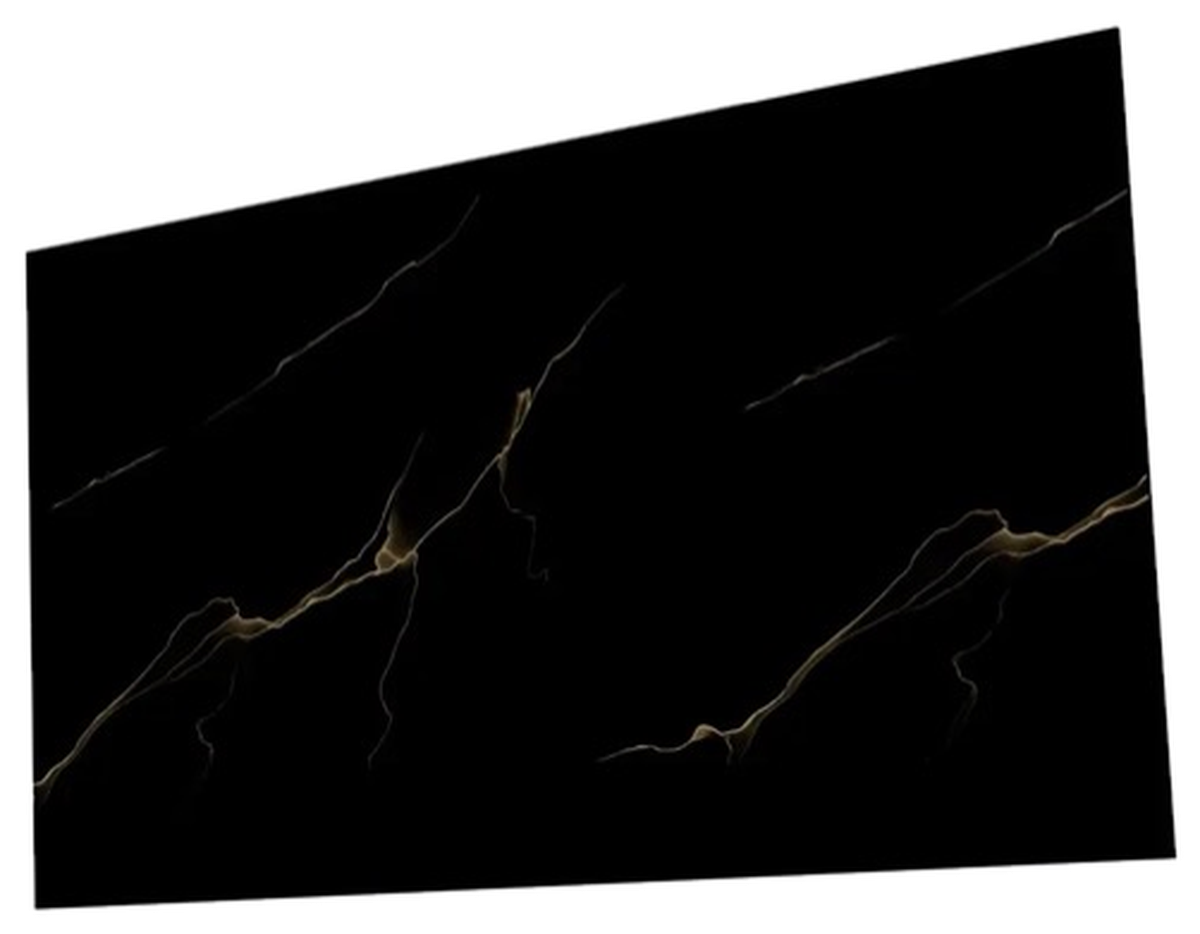
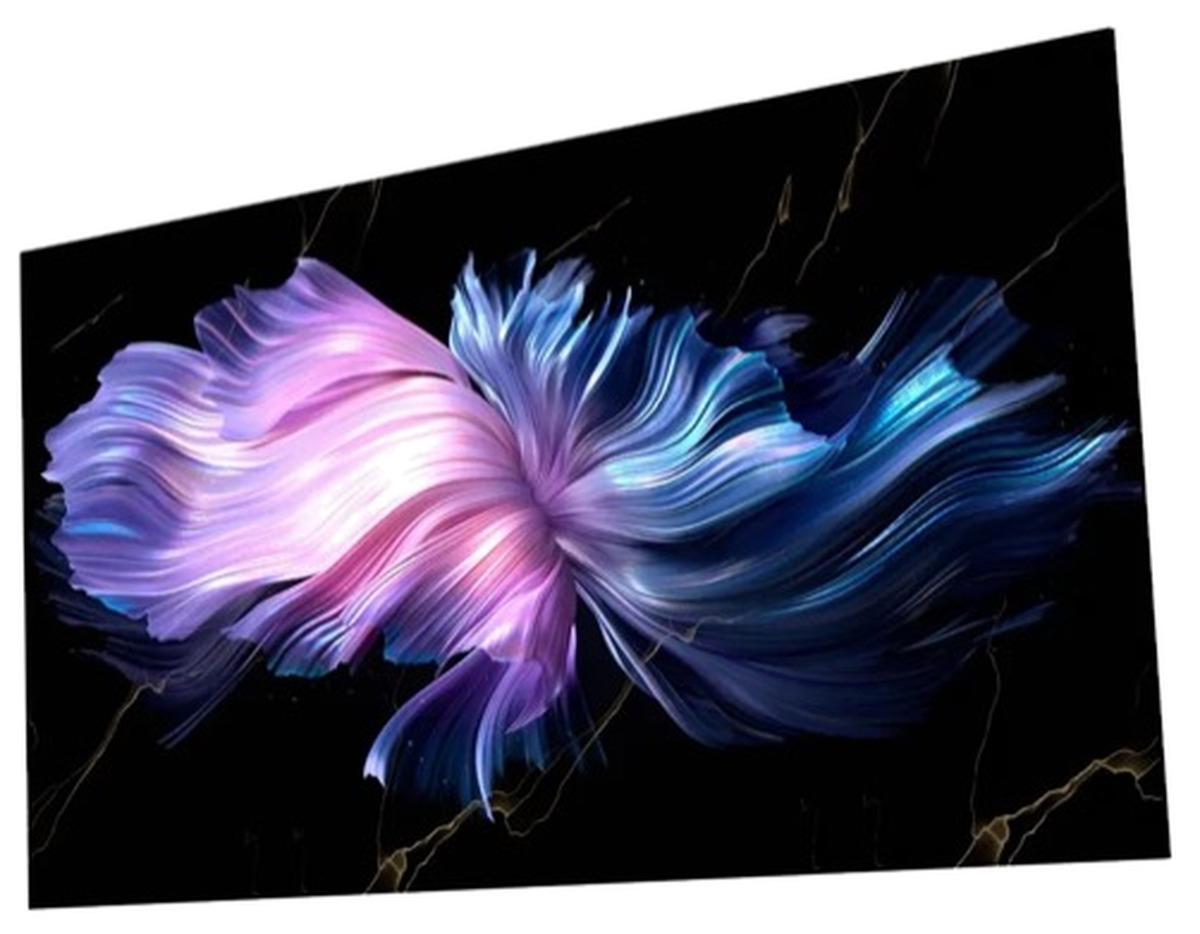
One module — drag the handle.
The most common remark about an LED wall is “the problem is when it's off.”
Not because the product is poor, but because that is simply how it looks.
And in a store, lobby or lounge, the screen is on for only part of the day.
What remains on that wall the rest of the time — that is where this product begins.
Before / After
Drag the handle and
look at the same wall twice.
Left is powered off, right is powered on.
The camera and the wall are unchanged.
Only the power is.
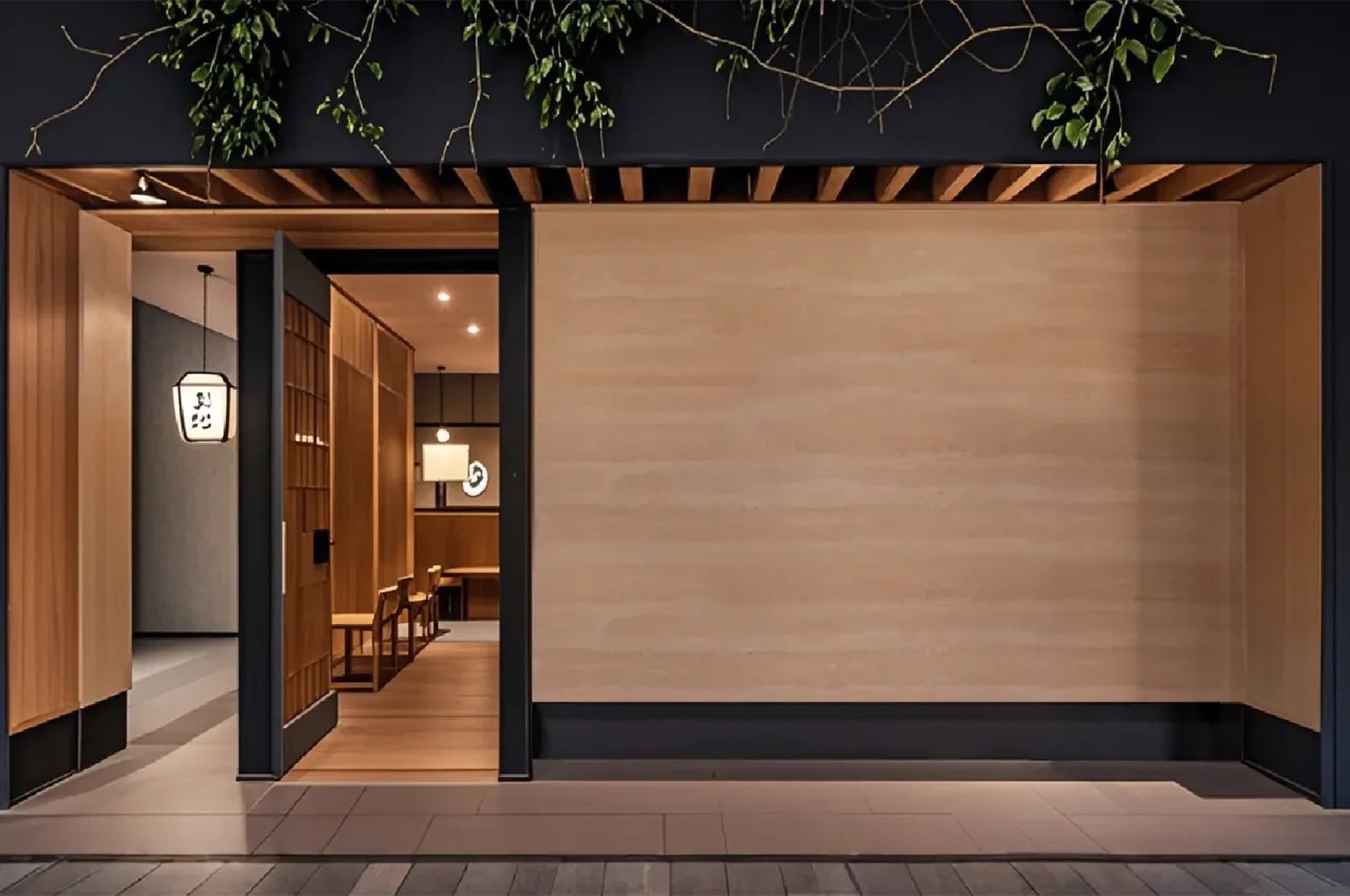
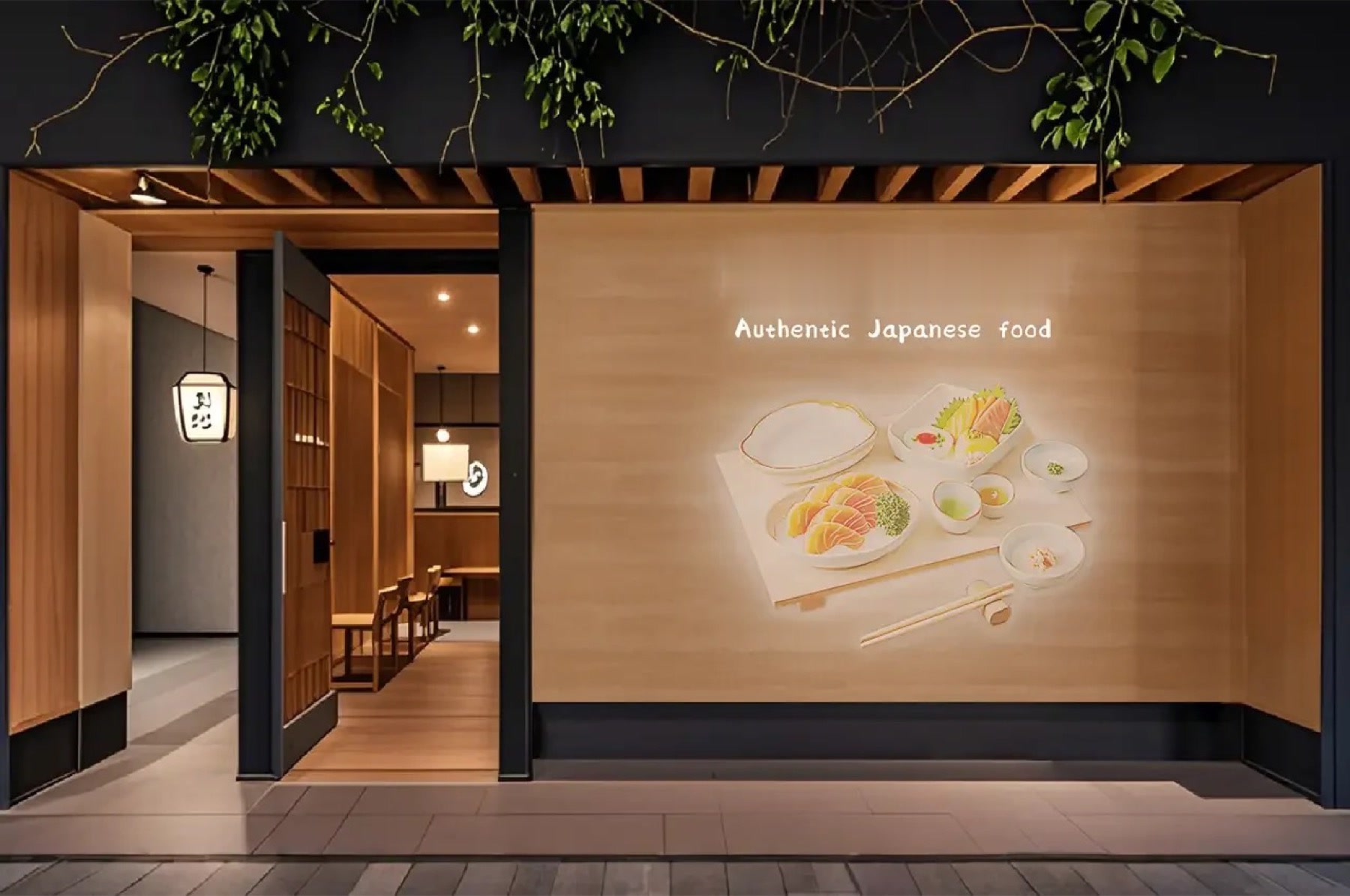
01 / Storefront
Outside opening hours,
a finish — not a dead sign
After closing, an unlit sign becomes the darkest surface on the street.
This wall returns to a timber finish and stays part of the façade.
02 / Reception
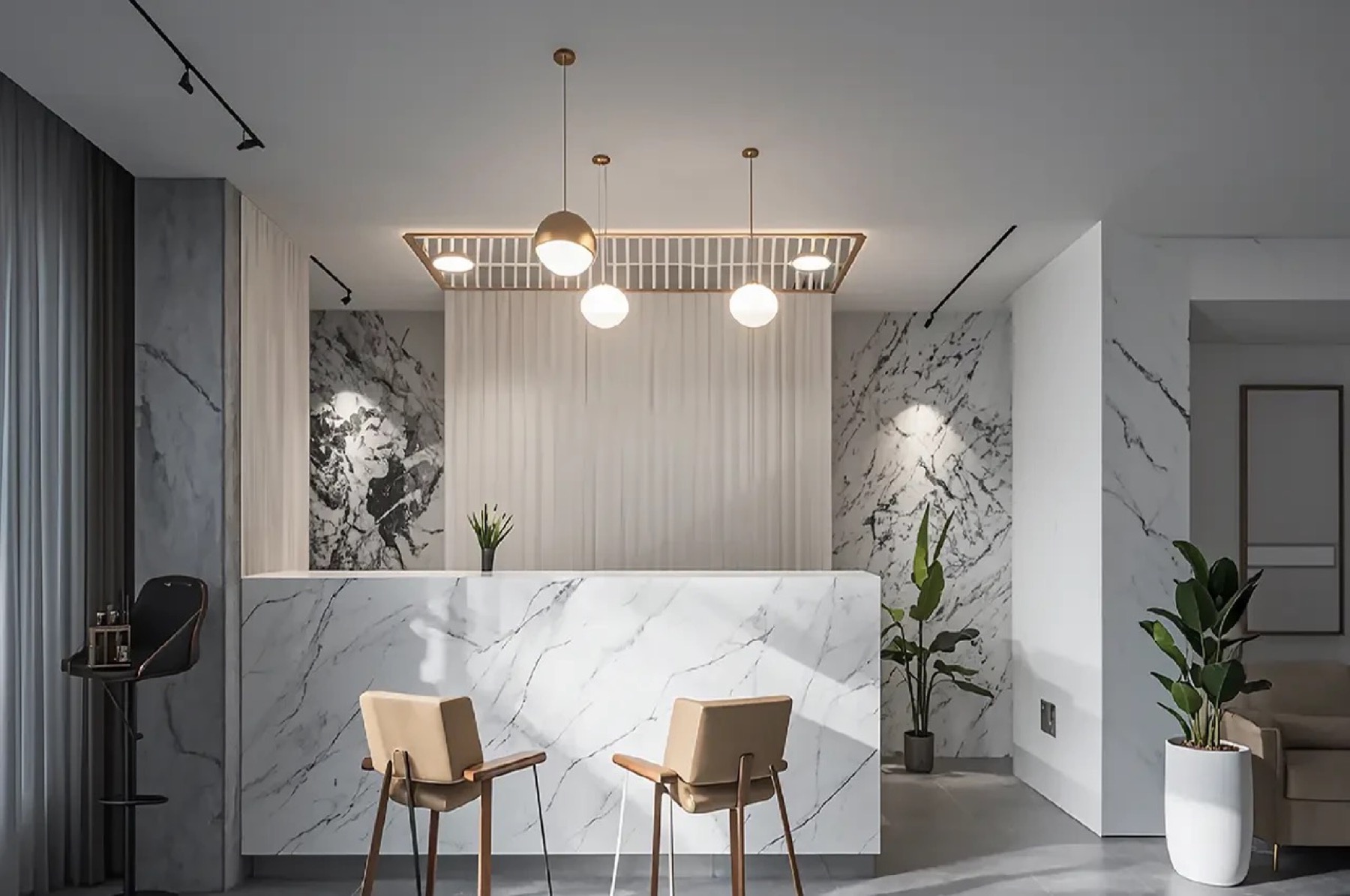
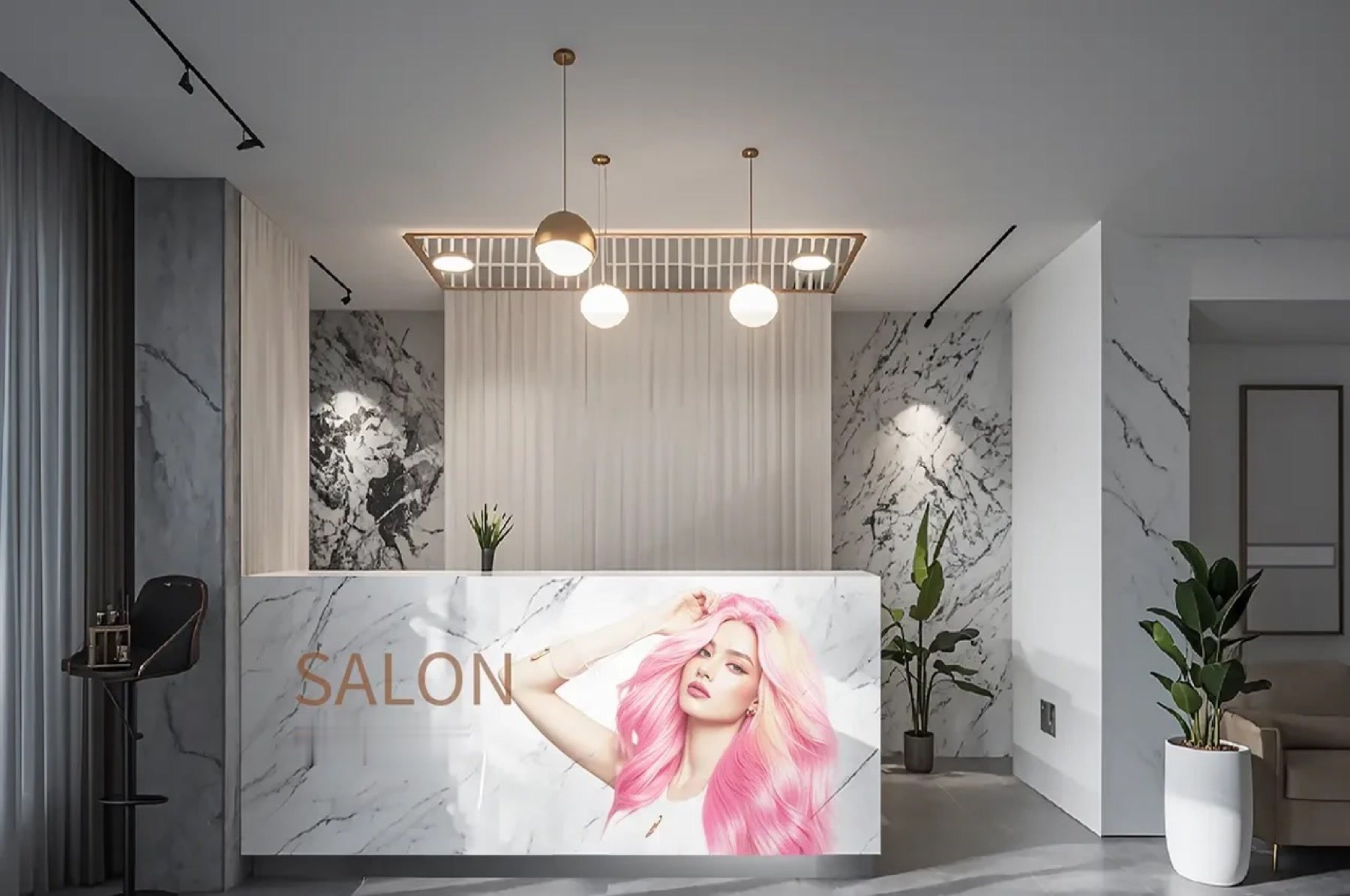
One marble wall
becomes the screen itself
The wall behind reception is the brand's first impression.
You need no separate display, and when nothing is playing it is simply fine stone.
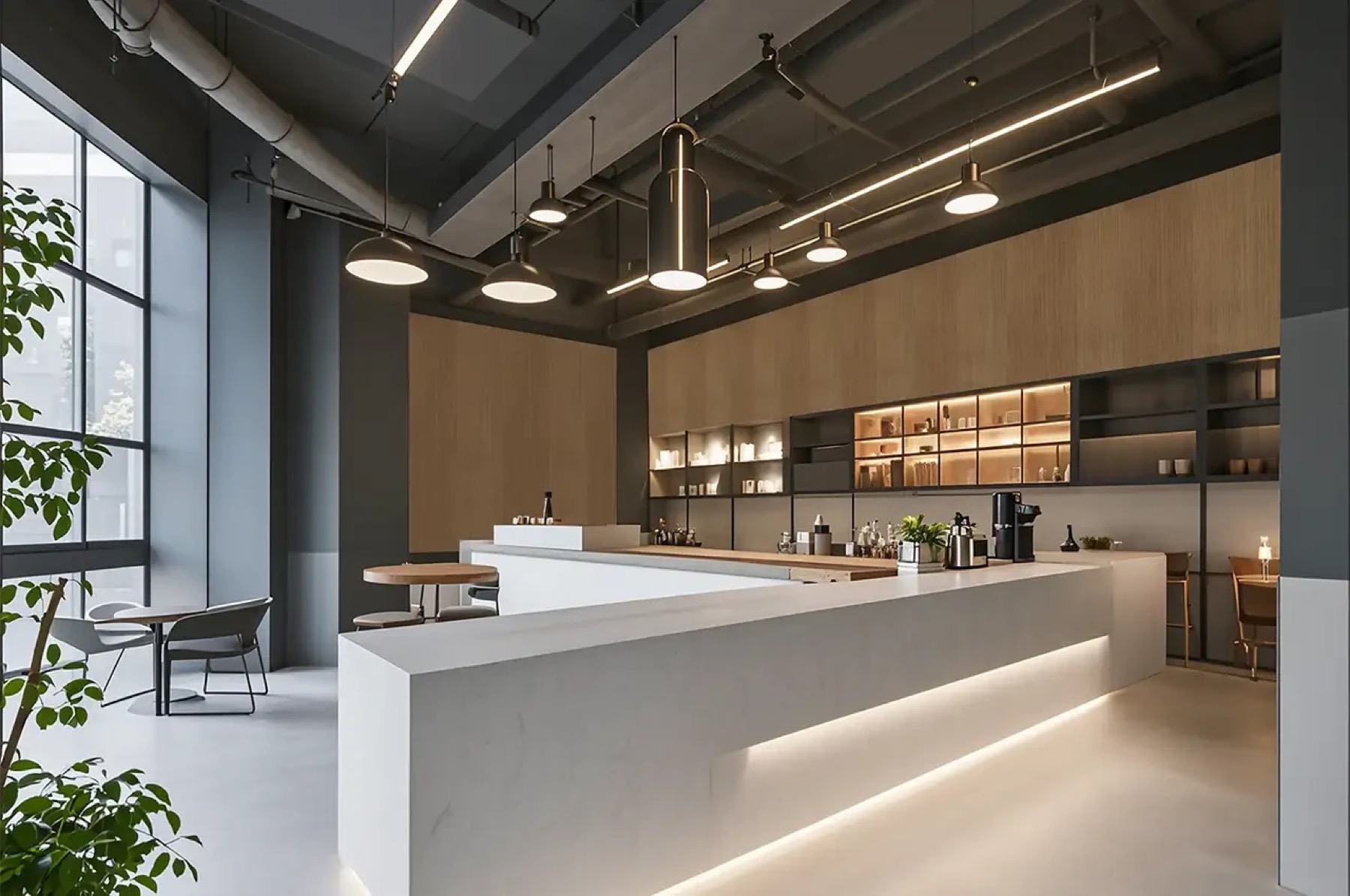
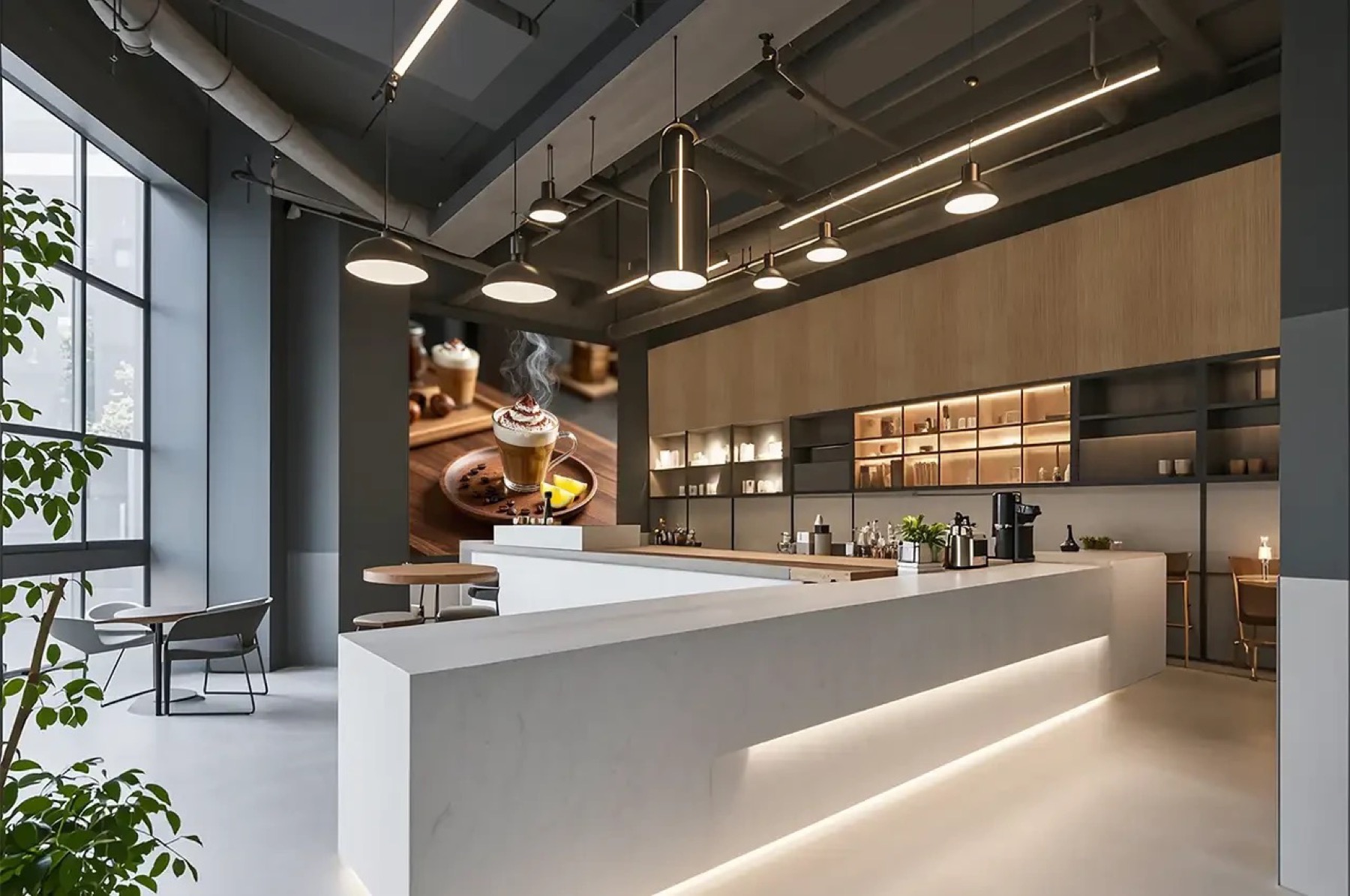
03 / Café · Dining
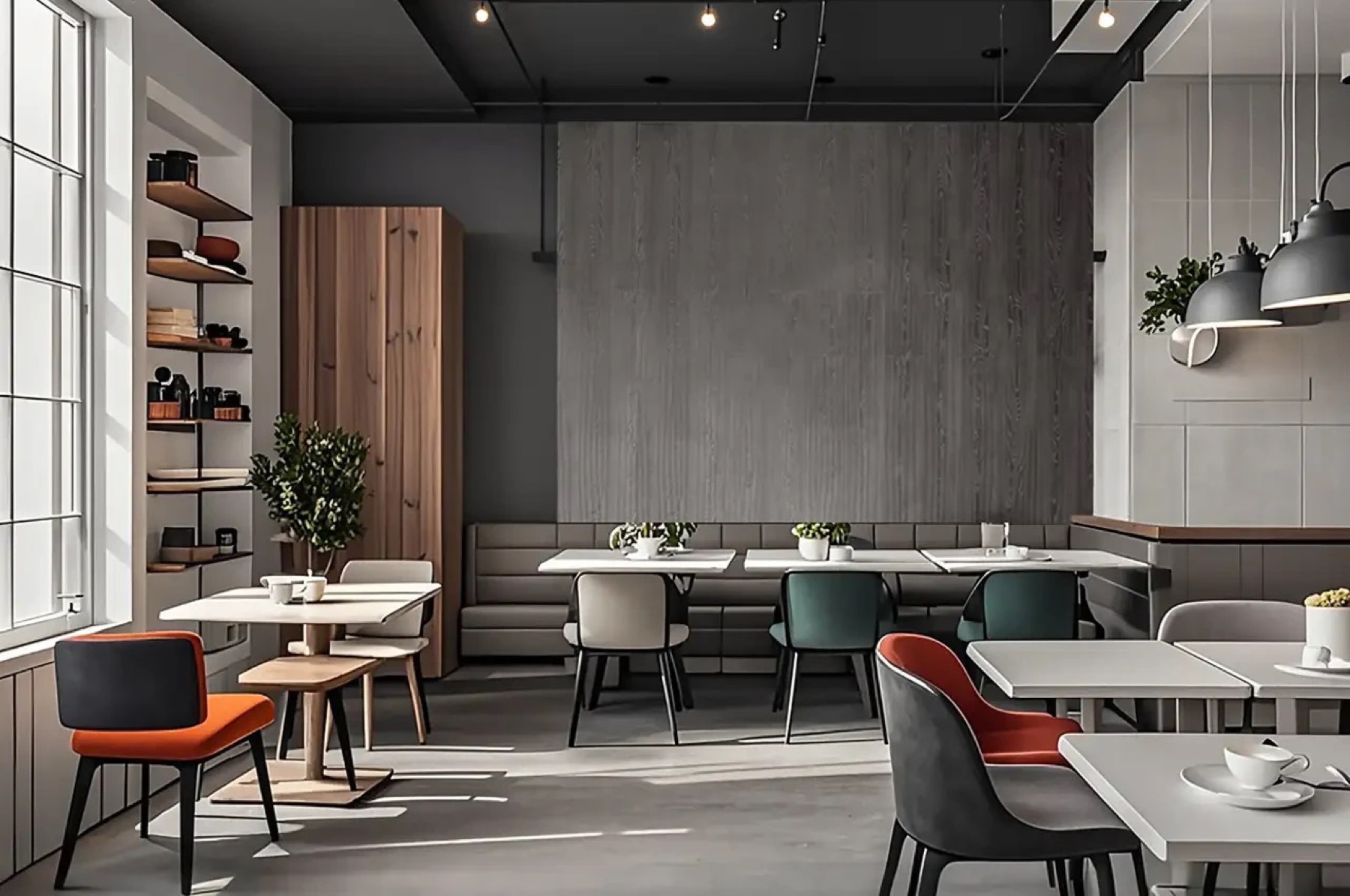
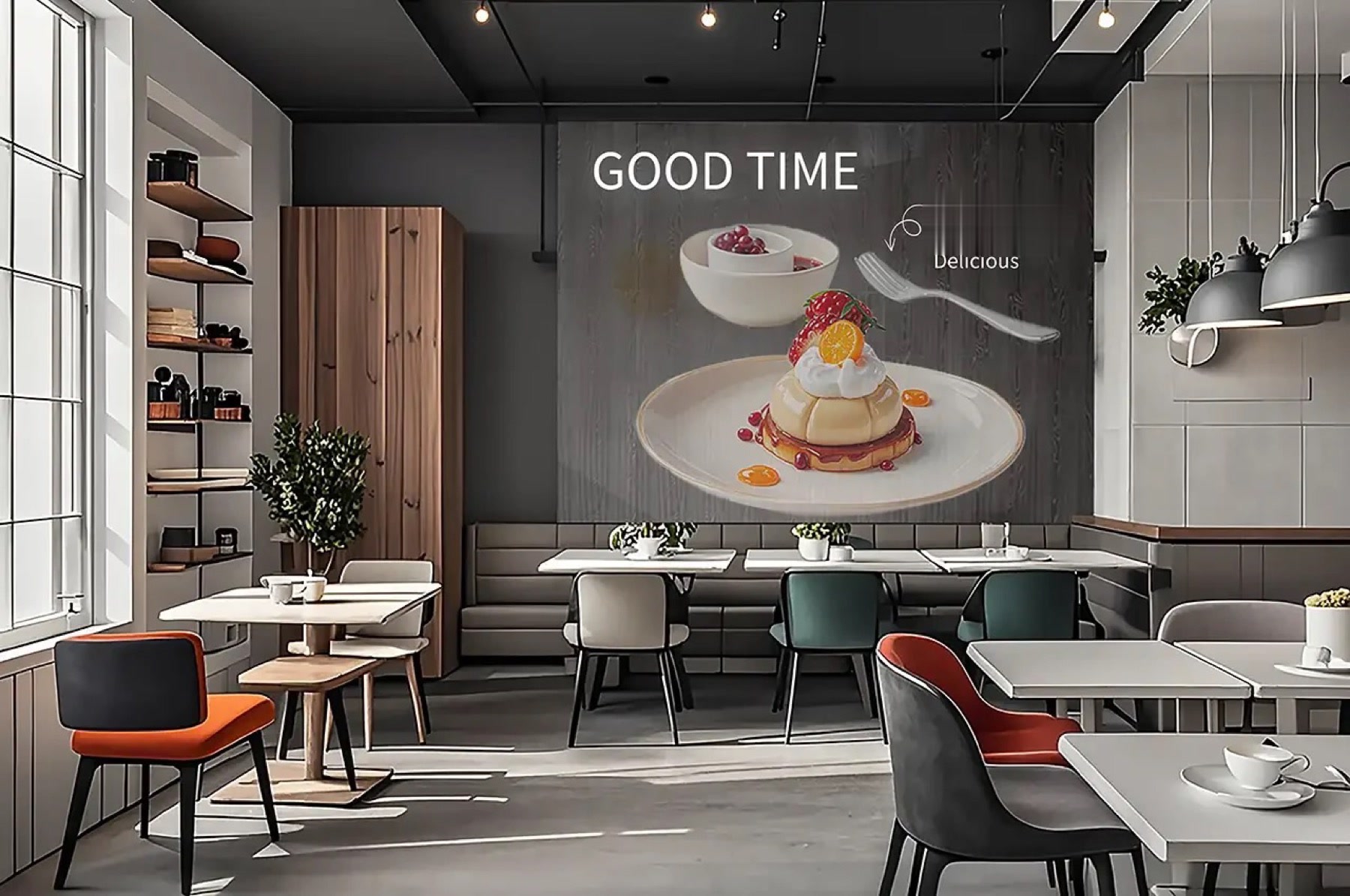
The menu changes,
the wall does not
No reprinting for a seasonal menu.
Upload an image; take it down and the wall finish returns.
04 / Behind the counter
Where people stand
closest of all
Guests see the wall behind the till from within a metre.
A visible dot grid shows immediately here — which is exactly why the surface finish matters most.
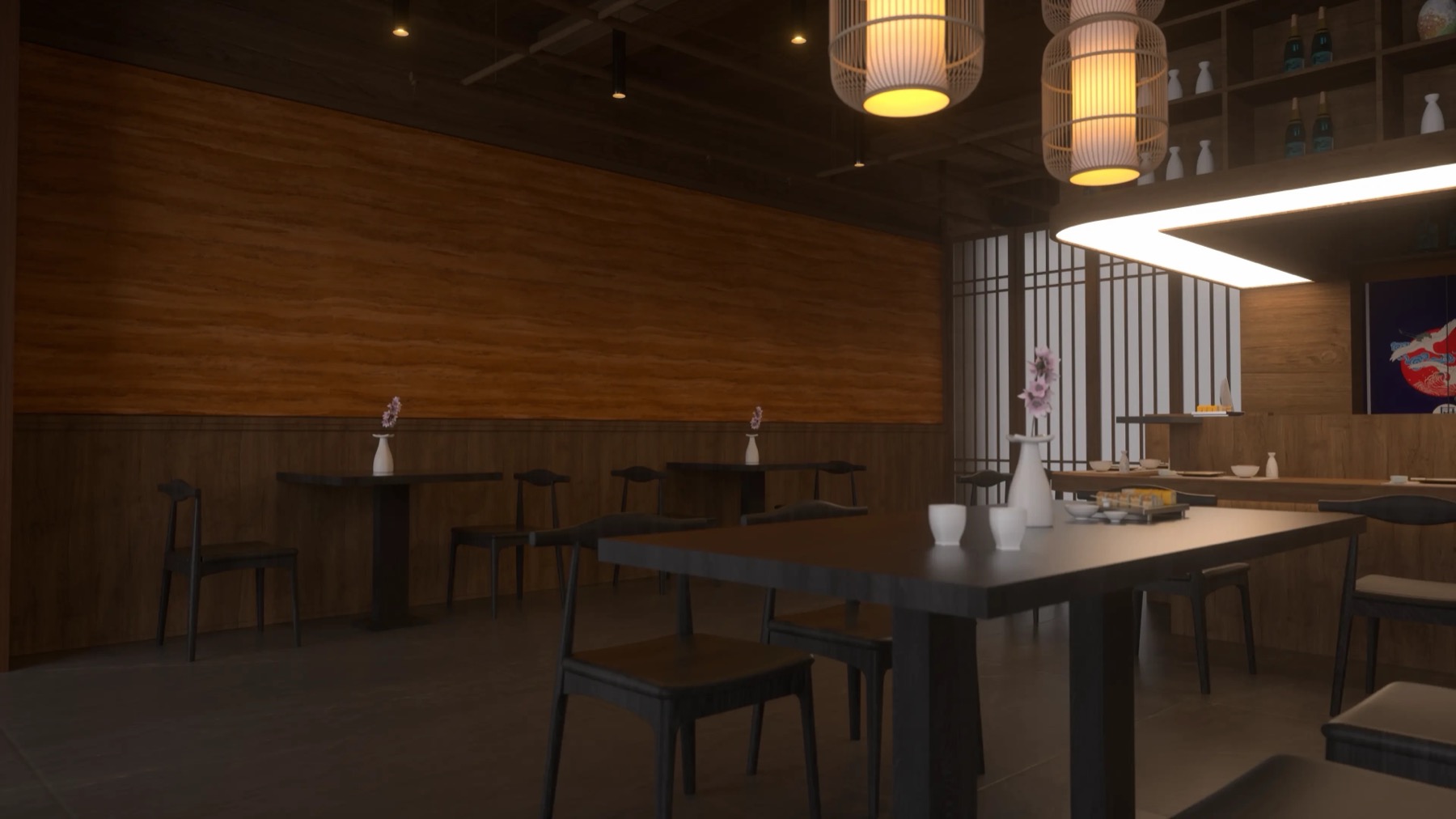
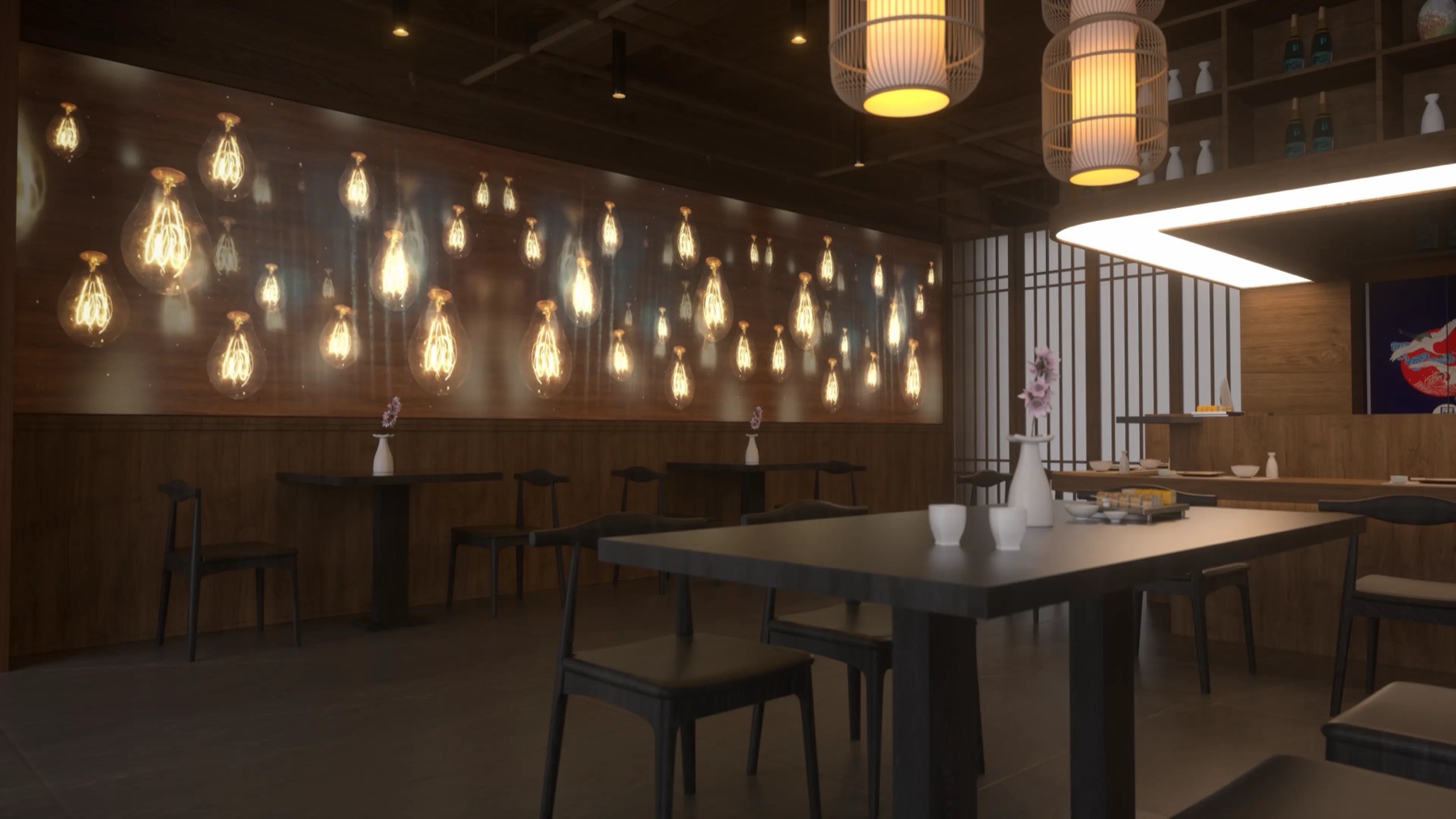
05 / Bar · Izakaya
Change the mood by the wall,
not by adding fixtures
New light fittings bring wiring and ceiling work with them.
When one wall becomes the light, that work disappears.
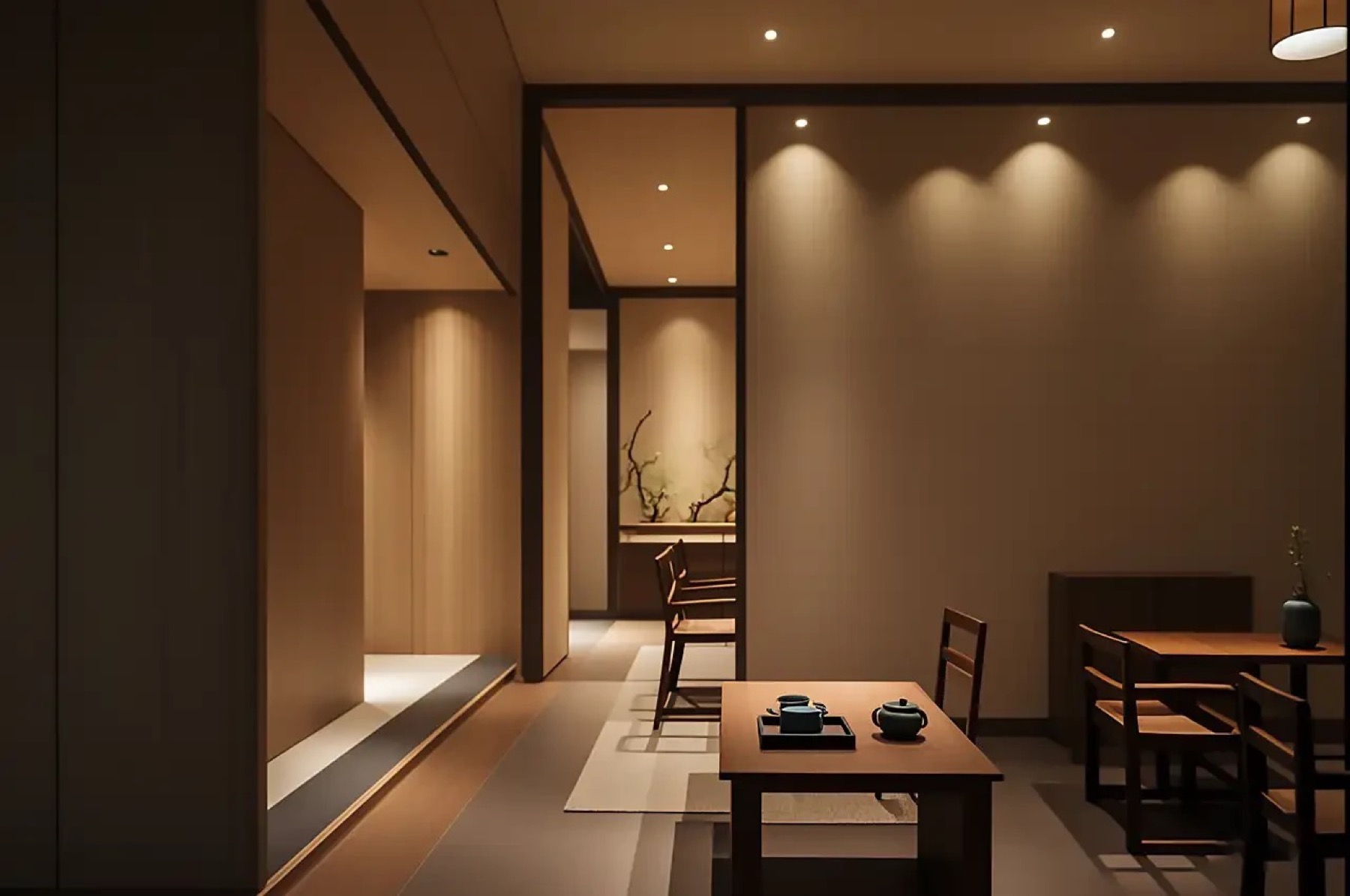
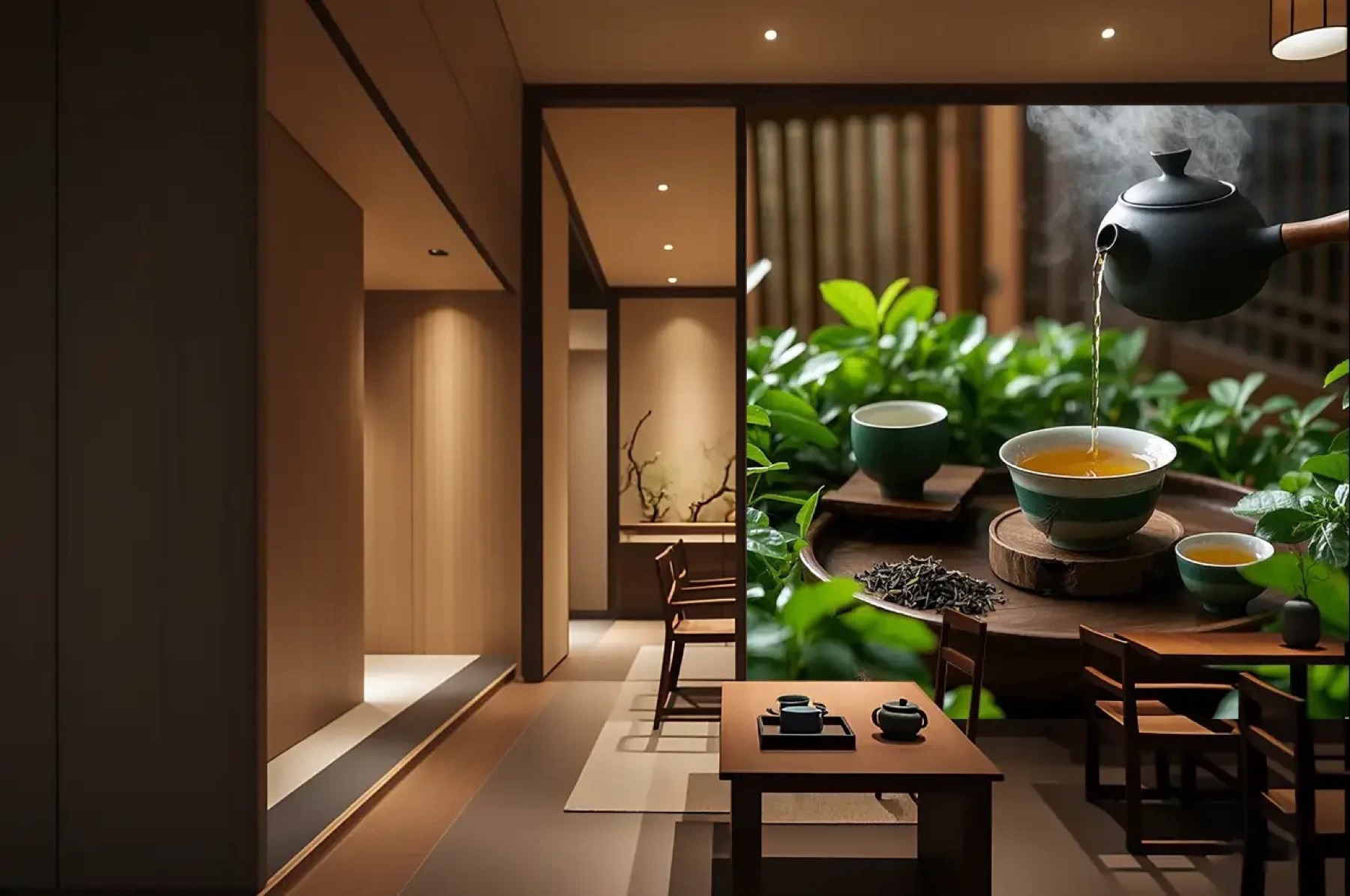
06 / Private room · Tea house
Rooms where “off”
is the default state
Where calm is the product, the screen is on for the shorter part of the day.
It should be a finish by default, opening only when needed.
Why it works
On the three seconds
a wall stops being a wall
Anamorphic billboards are powerful not because of resolution.
It is because something you took for flat pushes out into space.
People stopped in front of the Samsung Station wave not because it was well made, but because water cannot pour from a building corner — and their eyes saw it anyway.
Wonder does not come from image quality.
It comes from the place where expectation breaks.
This product runs that principle in reverse.
Instead of pushing out, it says it was never there. Stone does not emit light.
Everyone knows this.
The moment a video runs across that wall, a short blank opens in the viewer's mind — how is this possible.
How is this possible.
That blank is dwell time.
What makes someone look at an advert twice is not the message but those three unexplained seconds.
People do not walk away easily from what they have not understood.
And the effect grows with the size of the space and with every angle the wall turns. On a single flat plane it ends at “there is a screen”; but when the same image continues around a column and folds at a corner, where the wall ends becomes unclear.
Then the astonishment is no longer the size of the screen but the size of the space.
So the spec sheet for this product is not pixel pitch.
It is where, and how, it was placed.
Outdoors, one more condition applies.
Urban design review does not only look at the lit state.
It also asks what this surface reads as during the day.
A wall whose off-state is stone leaves less to explain.
Instead of pushing out,
it says it was never there.
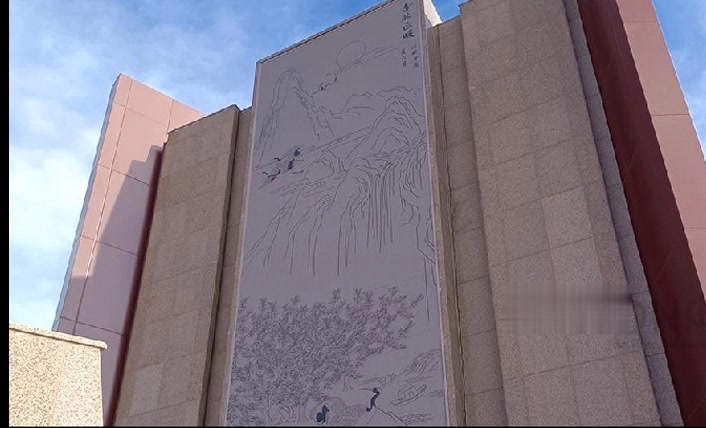
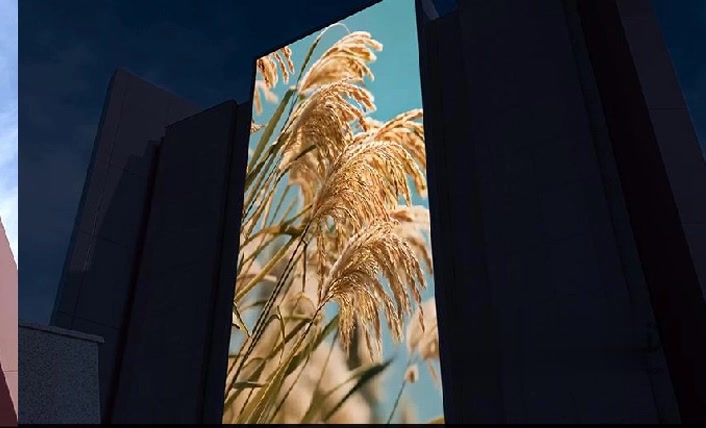
Outdoor · Building façade
A wall by day,
a screen by night
The same plane reads as carved stone by day and as a screen by night.
The more the elevation folds, the larger that shift appears.
One more thing — with this product, references are the product.
It is not decided from a catalogue; it is decided after seeing one installed wall.
So the standard by which we choose each early site decides the next hundred.
That is why we choose the spaces we build together carefully.
Real Units
Not renders —
actual photographs
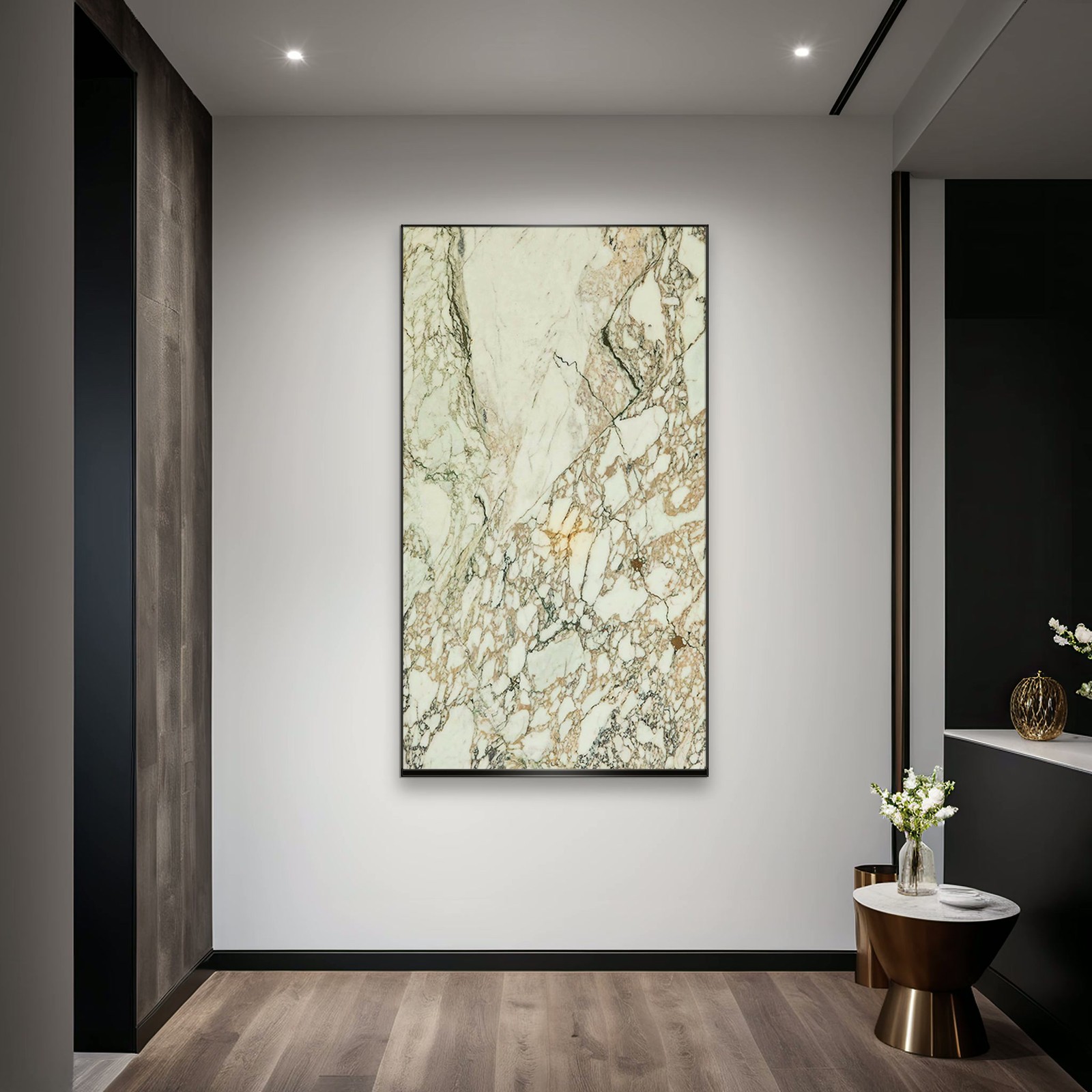
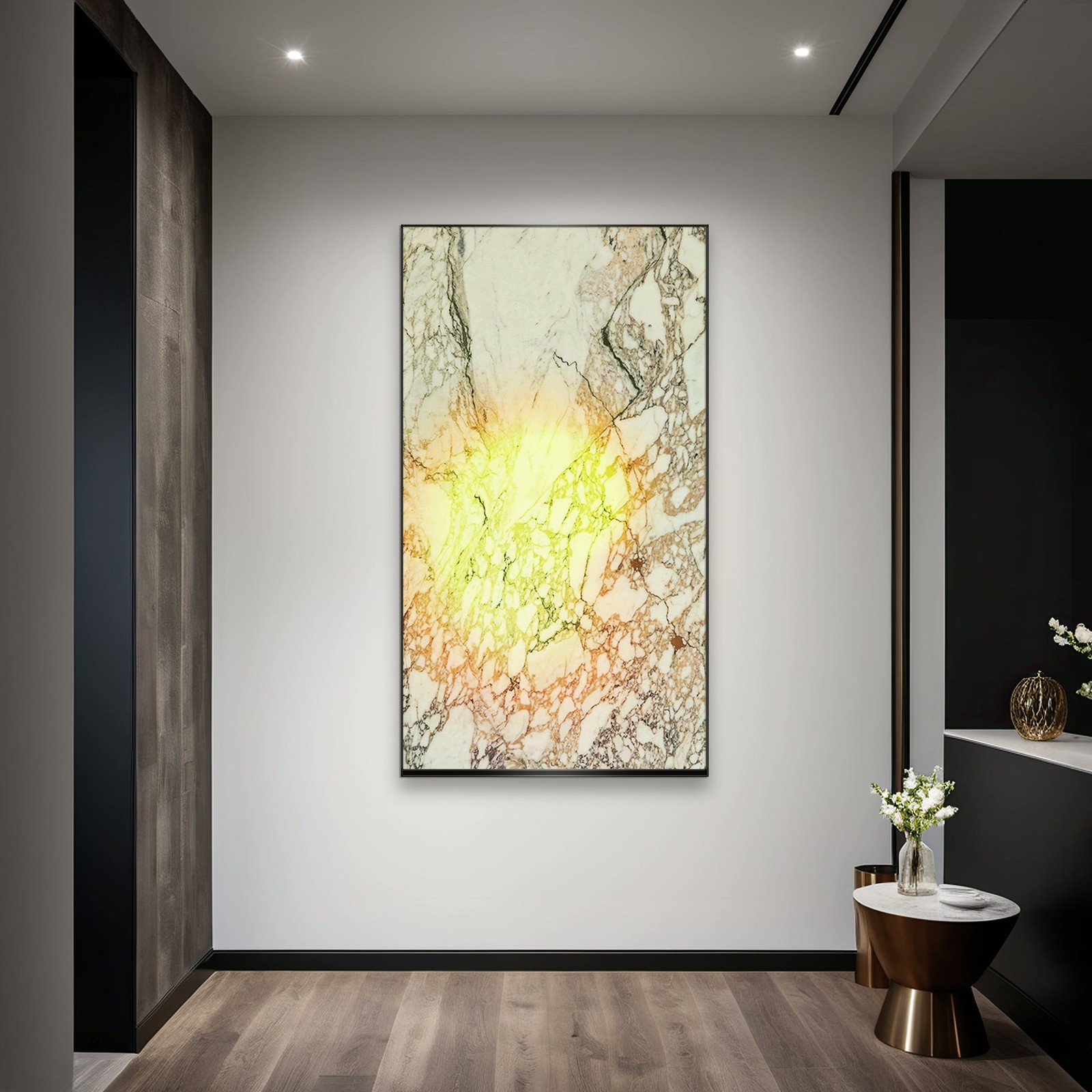
If the images above are design proposals, below are real panels stood up with the power simply switched on and off.
Shot on site, so the quality is rough — and more honest for it.
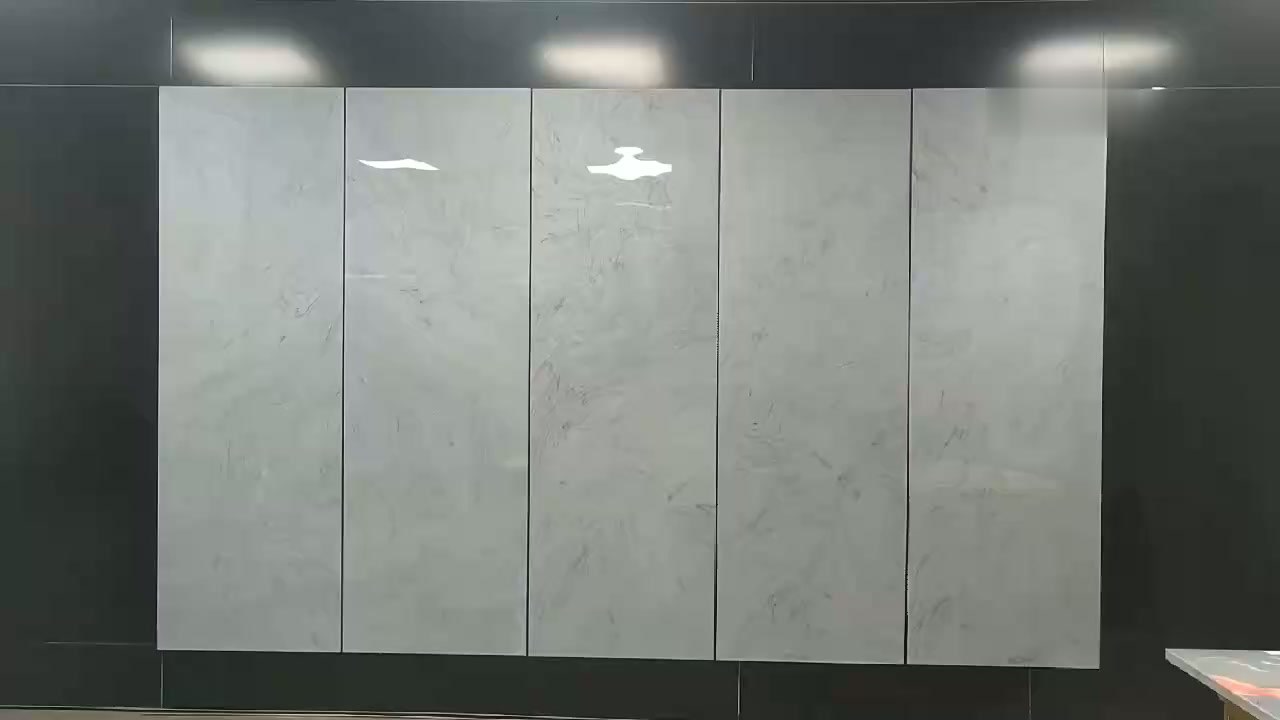
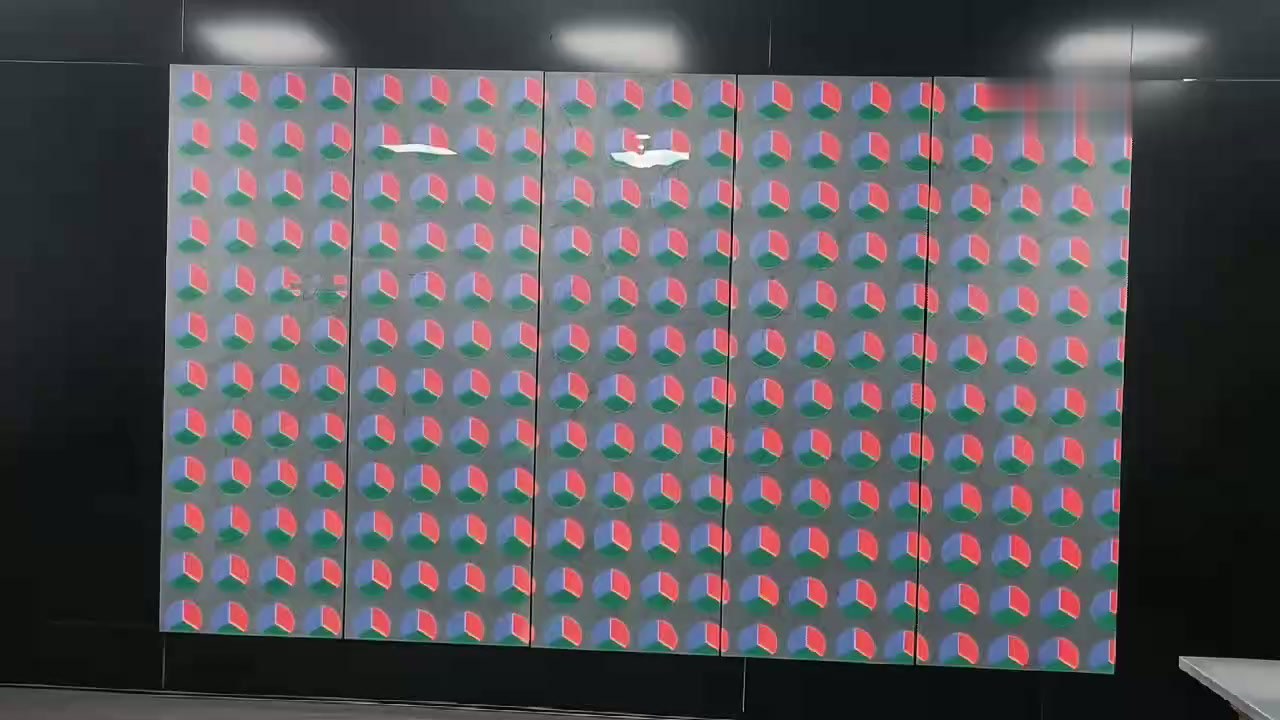
07 / Real · Marble wall
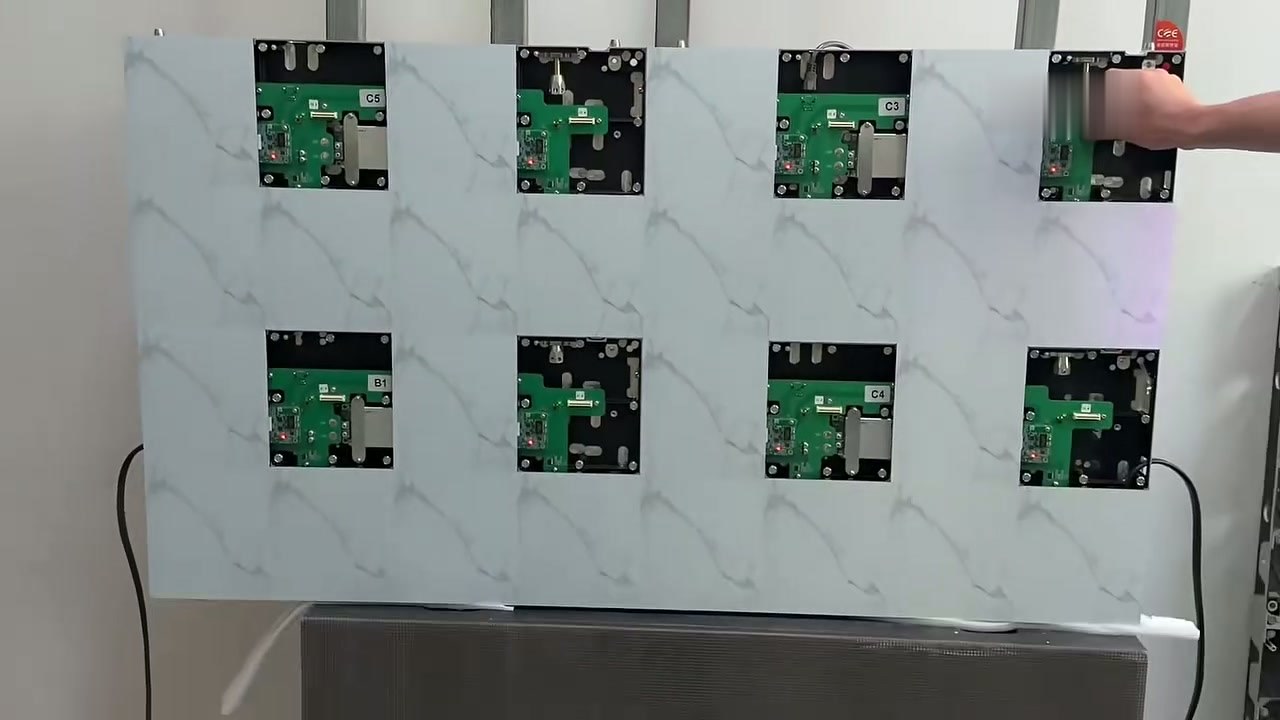
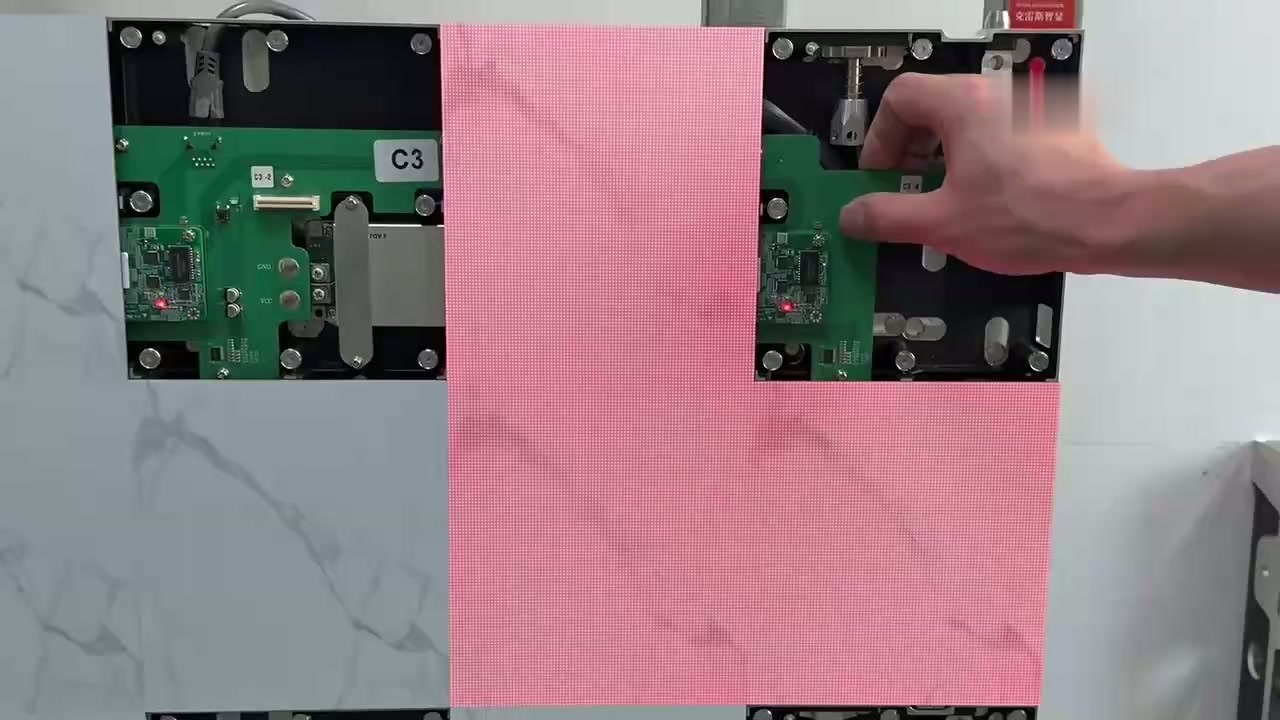
A wall of five joined panels
Powered off, all you see is stone grain and the seams.
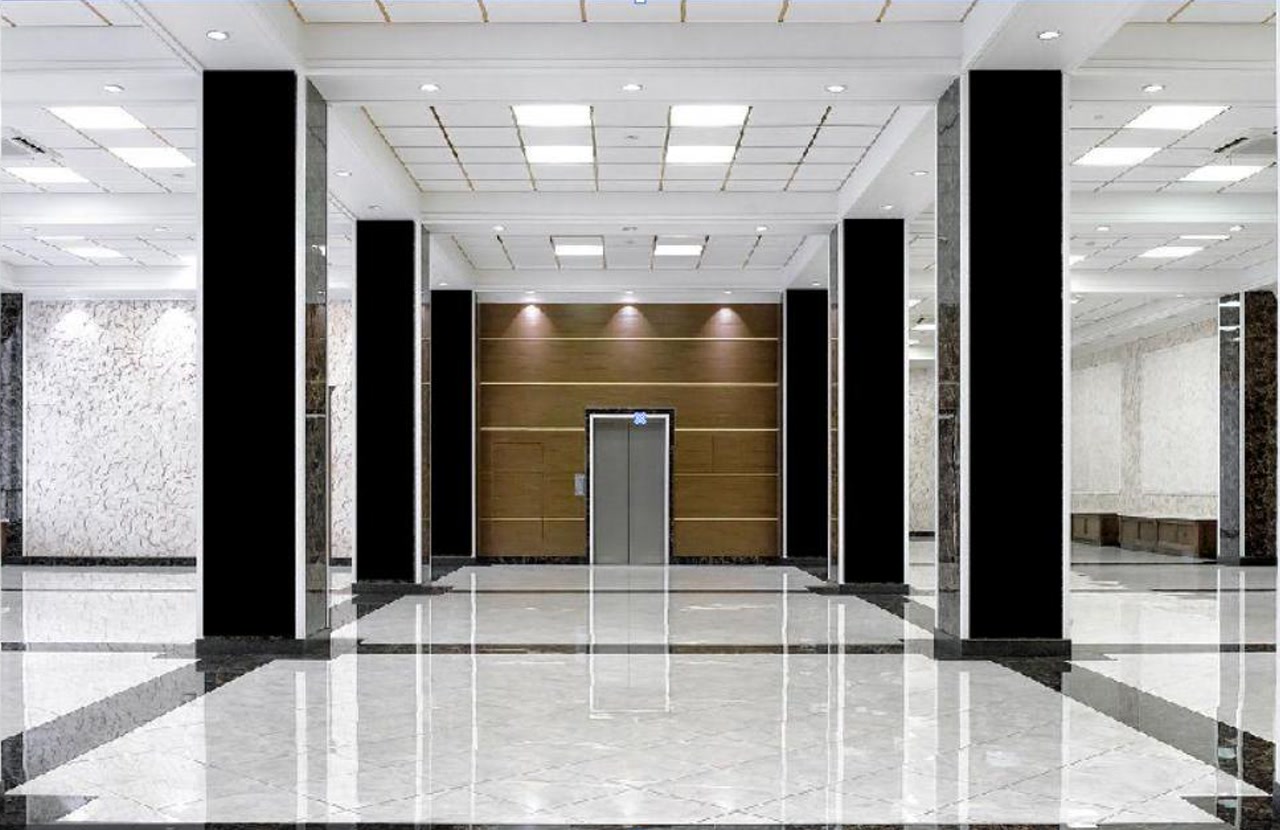
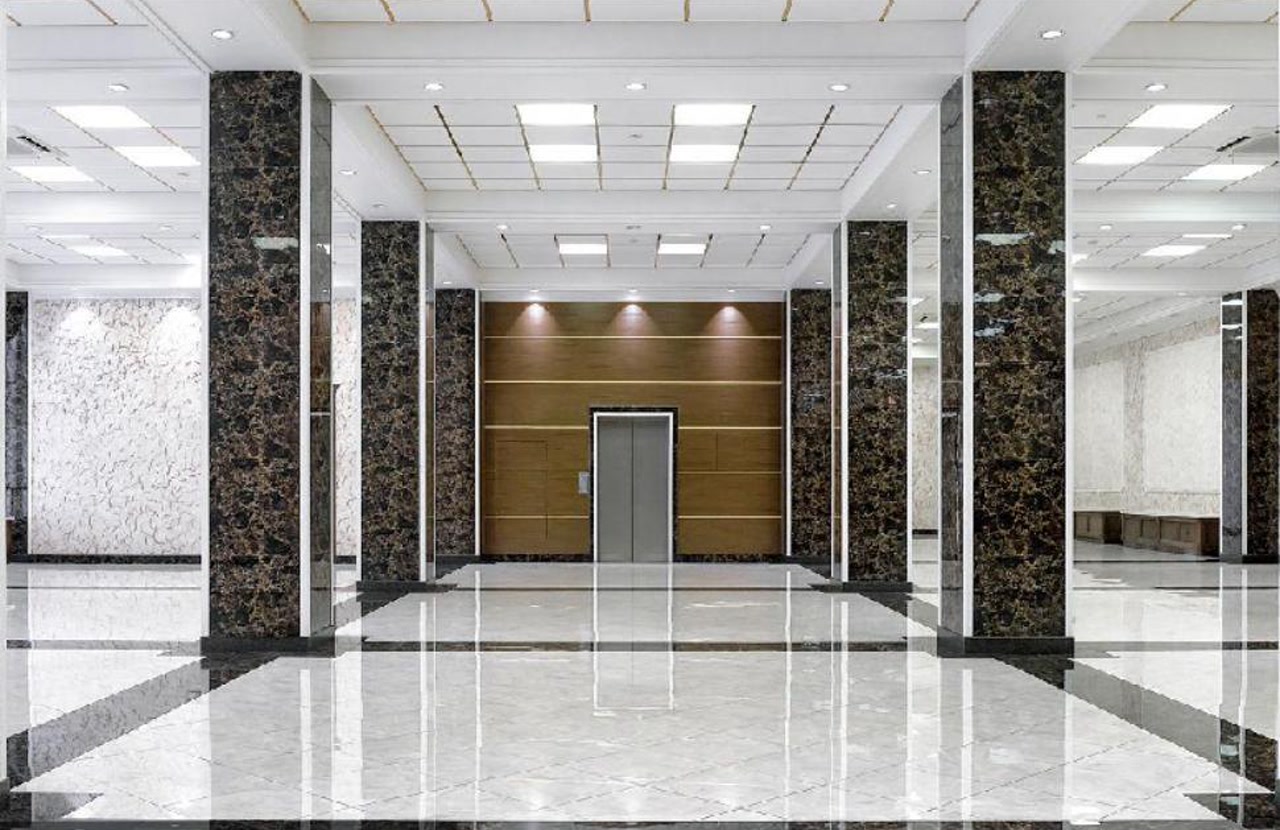
08 / Real · Lobby column
Wrapped around four faces
Flat surfaces are not the limit.
Because it is tiled, it goes onto columns and corners.
09 / Real · Framed
A single panel works the same way
You do not have to cover the whole wall.
Switched off, it stays a stone frame.
Material
Choose the finish
first
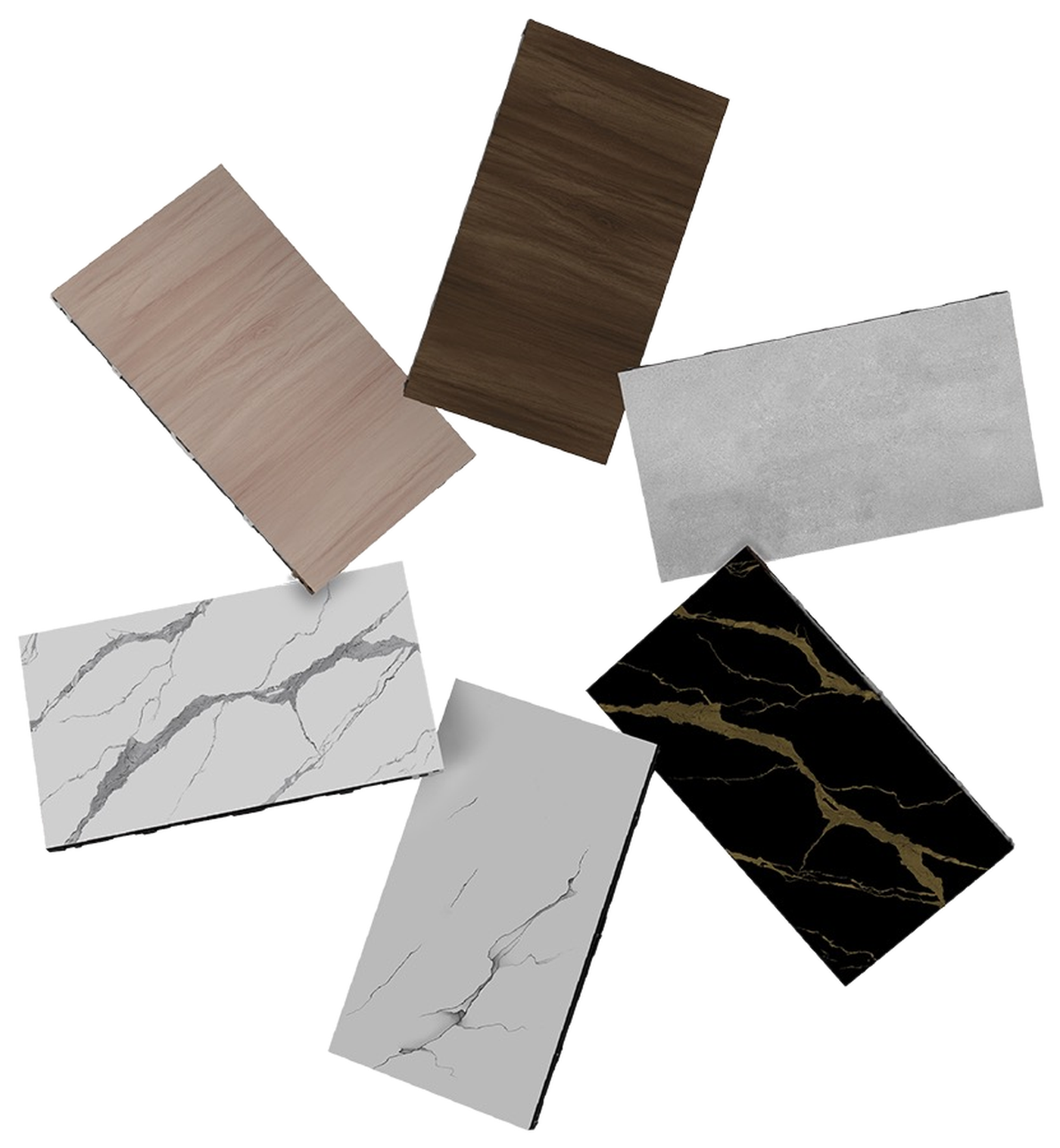
This is not “decide the screen, then apply a surface.”
You choose the stone or timber for the space first, and the light layer goes beneath that surface.
Real marble and timber, of course — and printed patterns or relief textures can be specified too.
Send us the finish sample you hold and we will match that pattern.
 Carrara White
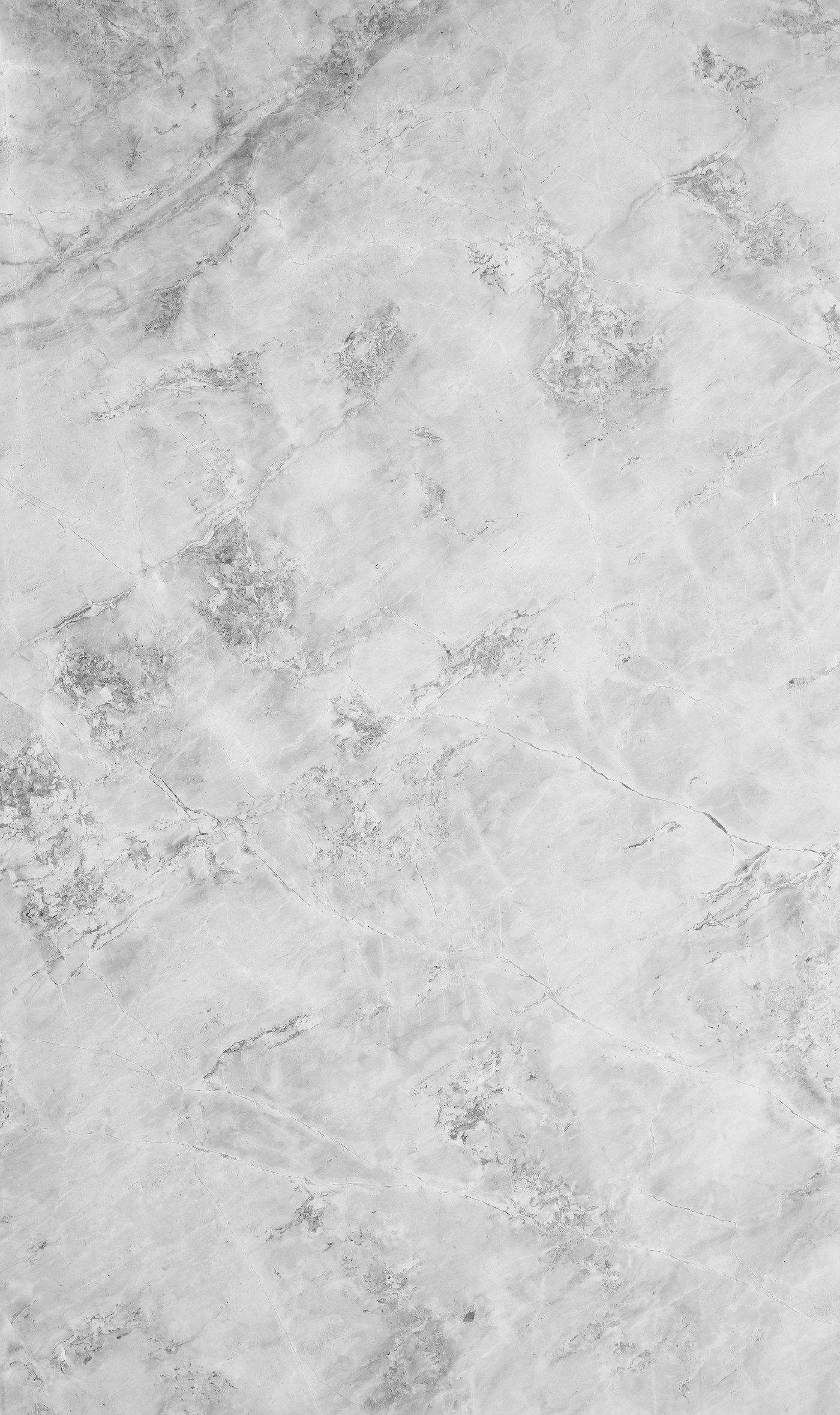 Pearl Grey
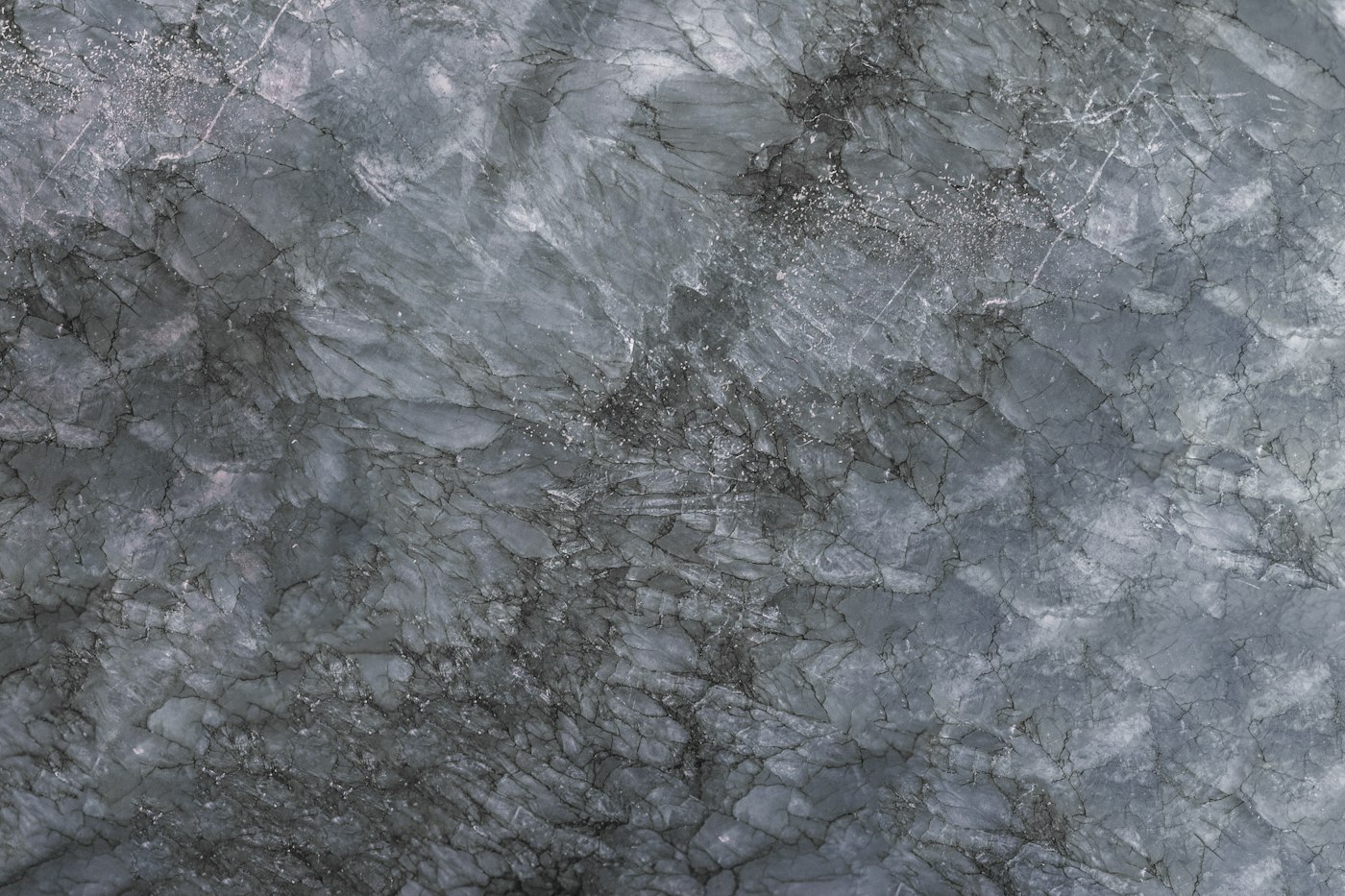 Graphite Grey
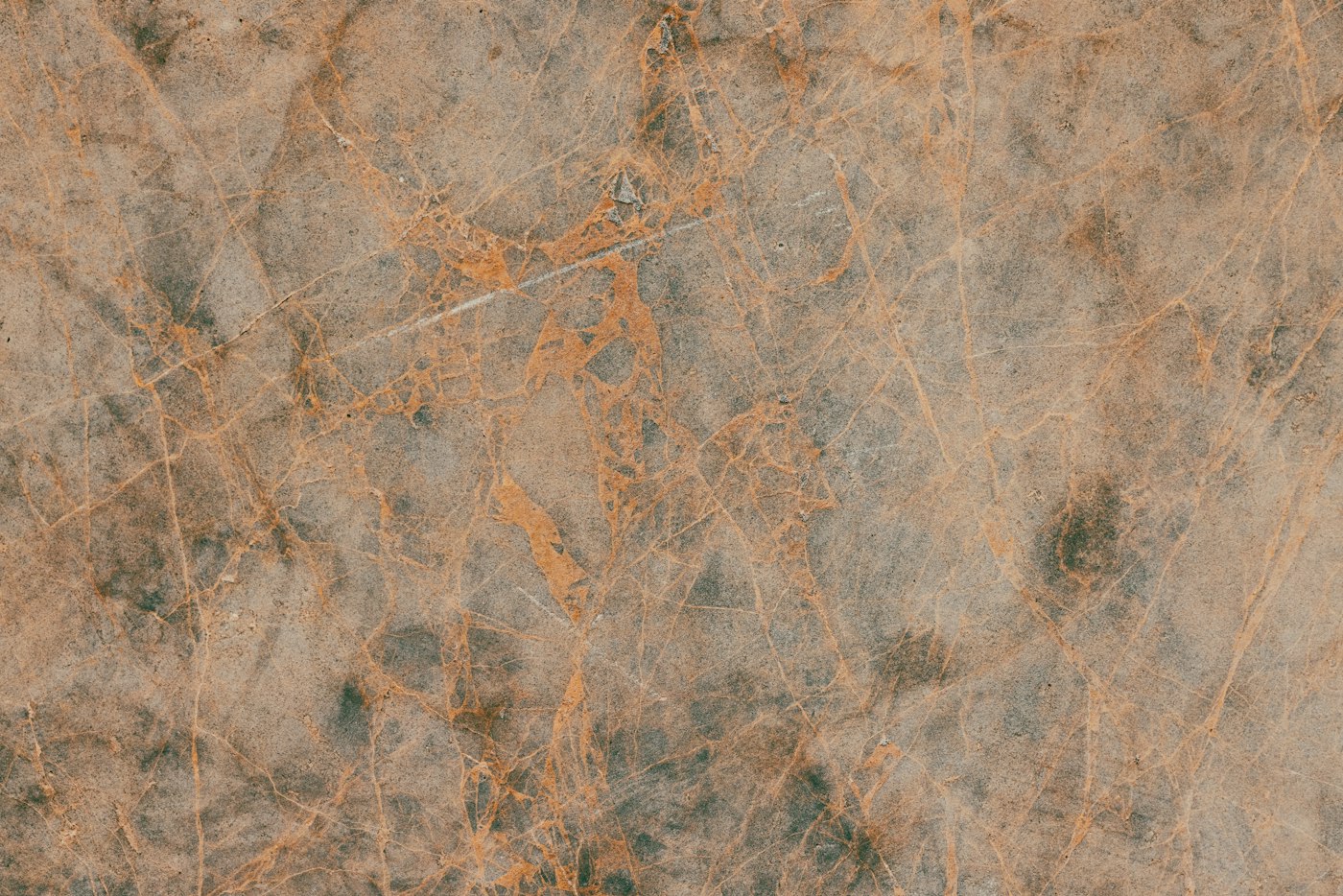 Amber Onyx
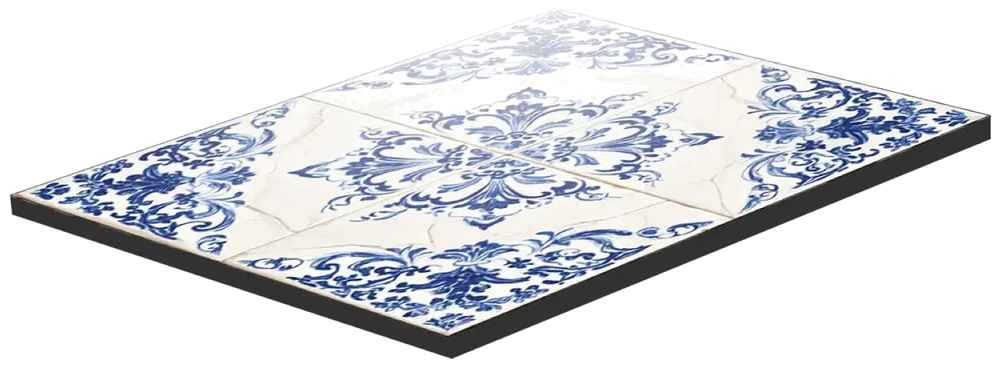 Azulejo
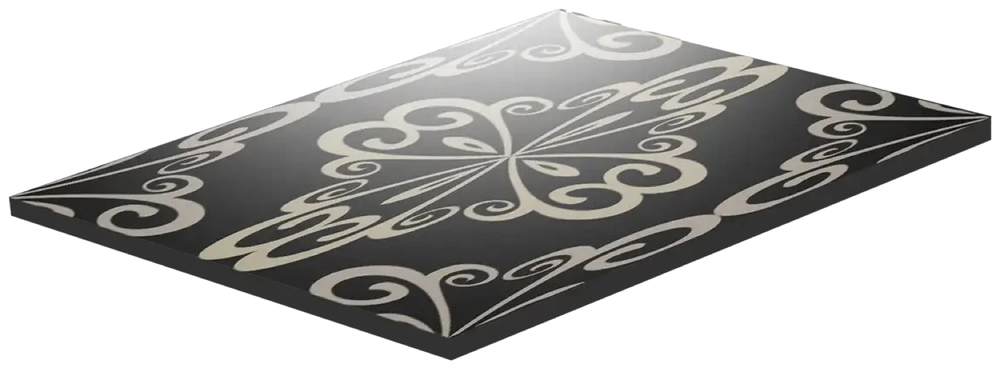 Black Pattern
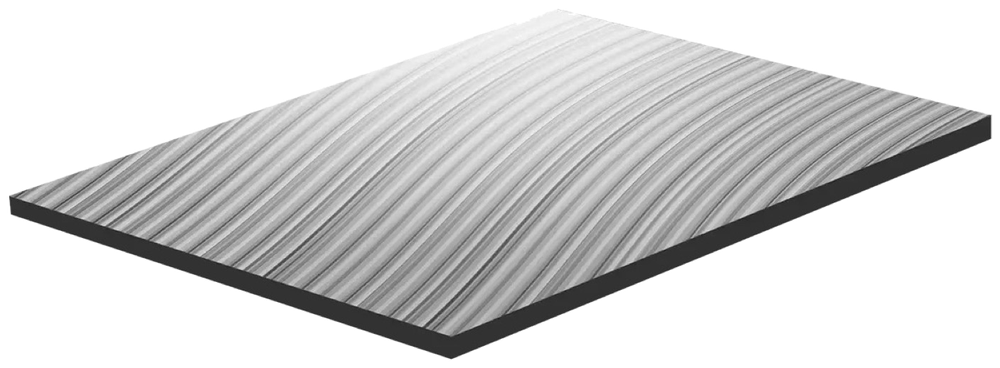 Grey Rib
One Wall, Many Faces
The wall once,
the content forever
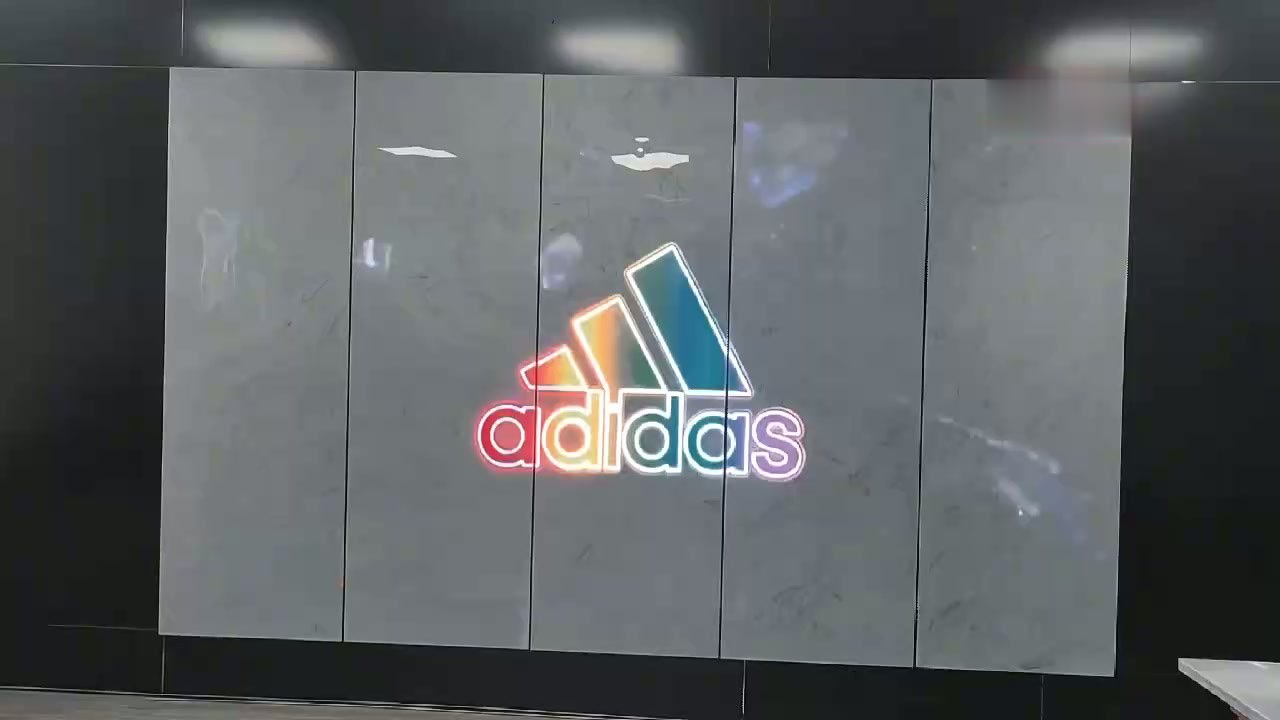
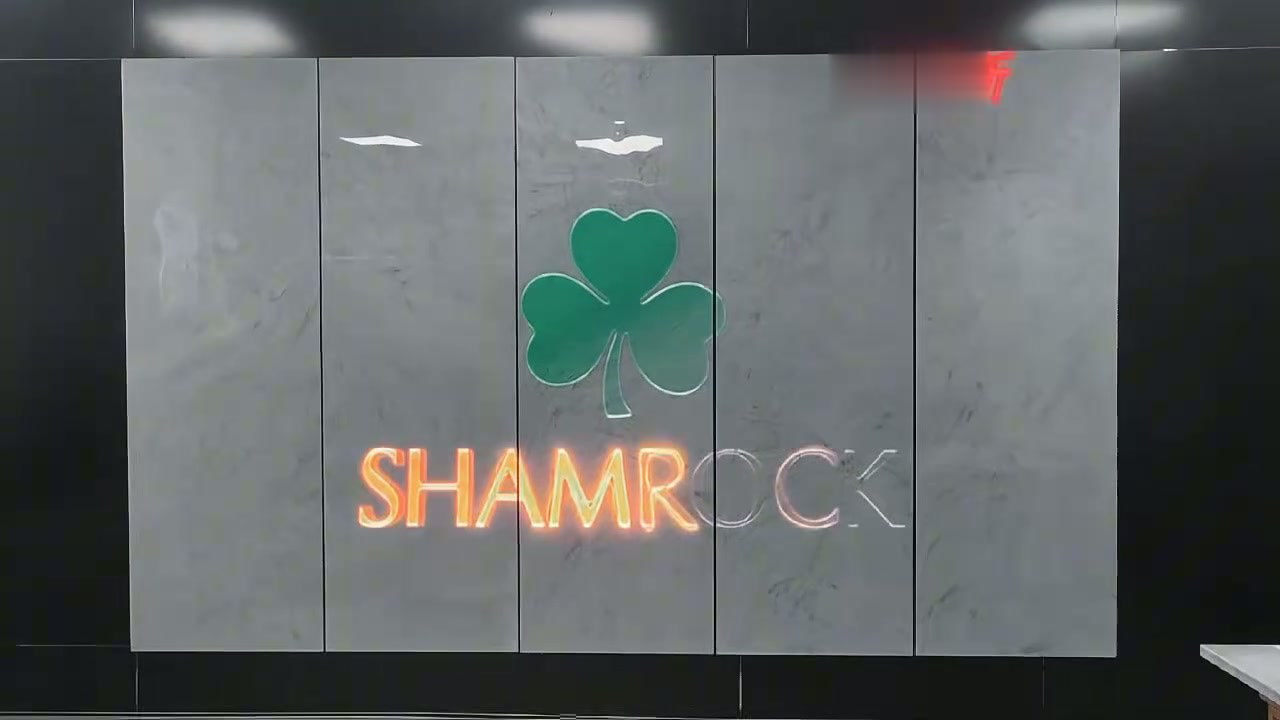
The three photographs below are the same wall, shot from the same spot.
Nothing was rebuilt; only what plays on it changed.
How it's made
Not applied —
cured
A finish layer added afterwards lifts under heat.
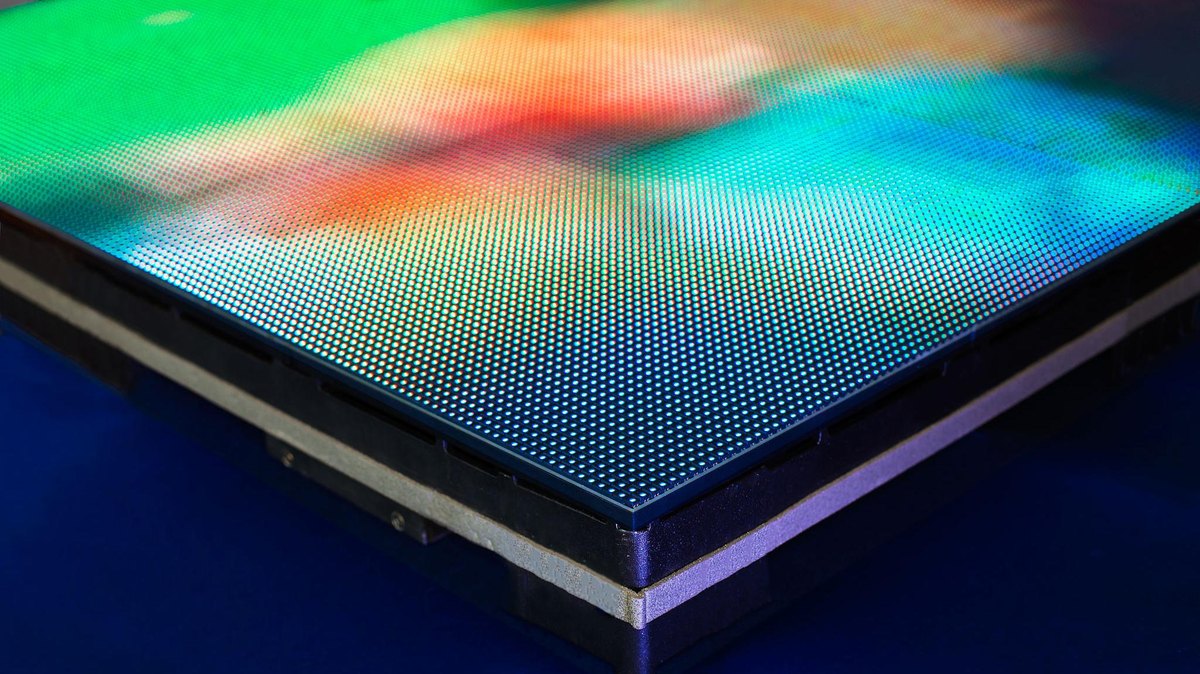
It has to be cured in one pass over the emitting surface so that surface and diode become one body.
That is why dedicated equipment is needed — and where this parts ways, a few months later, from products that imitate it with a film.

Up Close
A wall people
stand close to
From a distance it is just a screen.
This product earns its keep up close, because the grain of marble and the figure of wood only appear near to.
So look first at the short-viewing-distance places — behind reception, behind the till, the lift lobby, the corridor.
Where it goes
Where a wall already is
It does not claim new space.
It replaces a surface whose finish budget is already allocated.
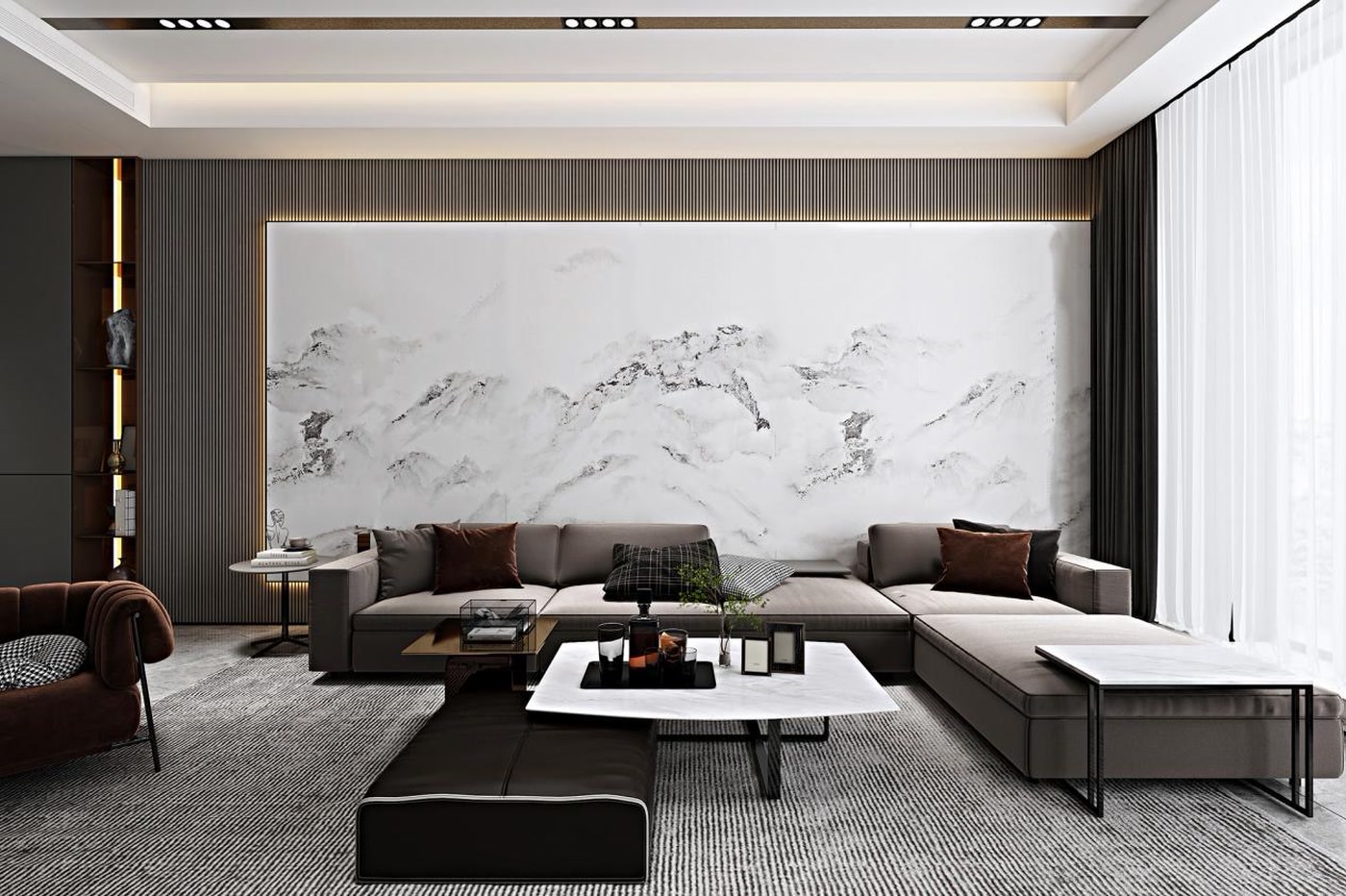
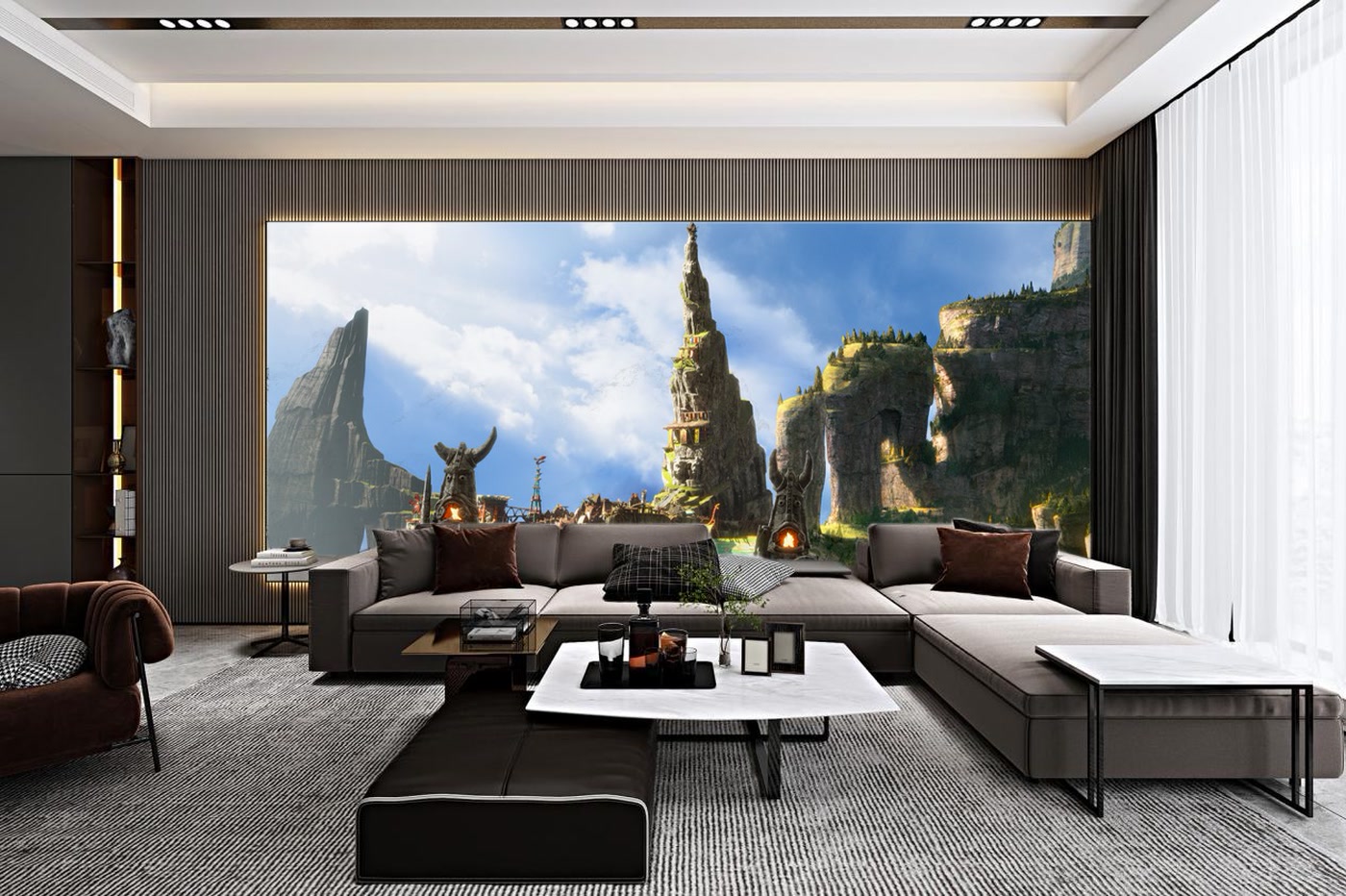
11 / Residential lounge
One plane behind the sofa,
already destined for a finish
A living-room feature wall is finished in stone or timber anyway.
Within that same budget, this wall is also the screen.
No separate television to hang, and no black rectangle left when it is off.
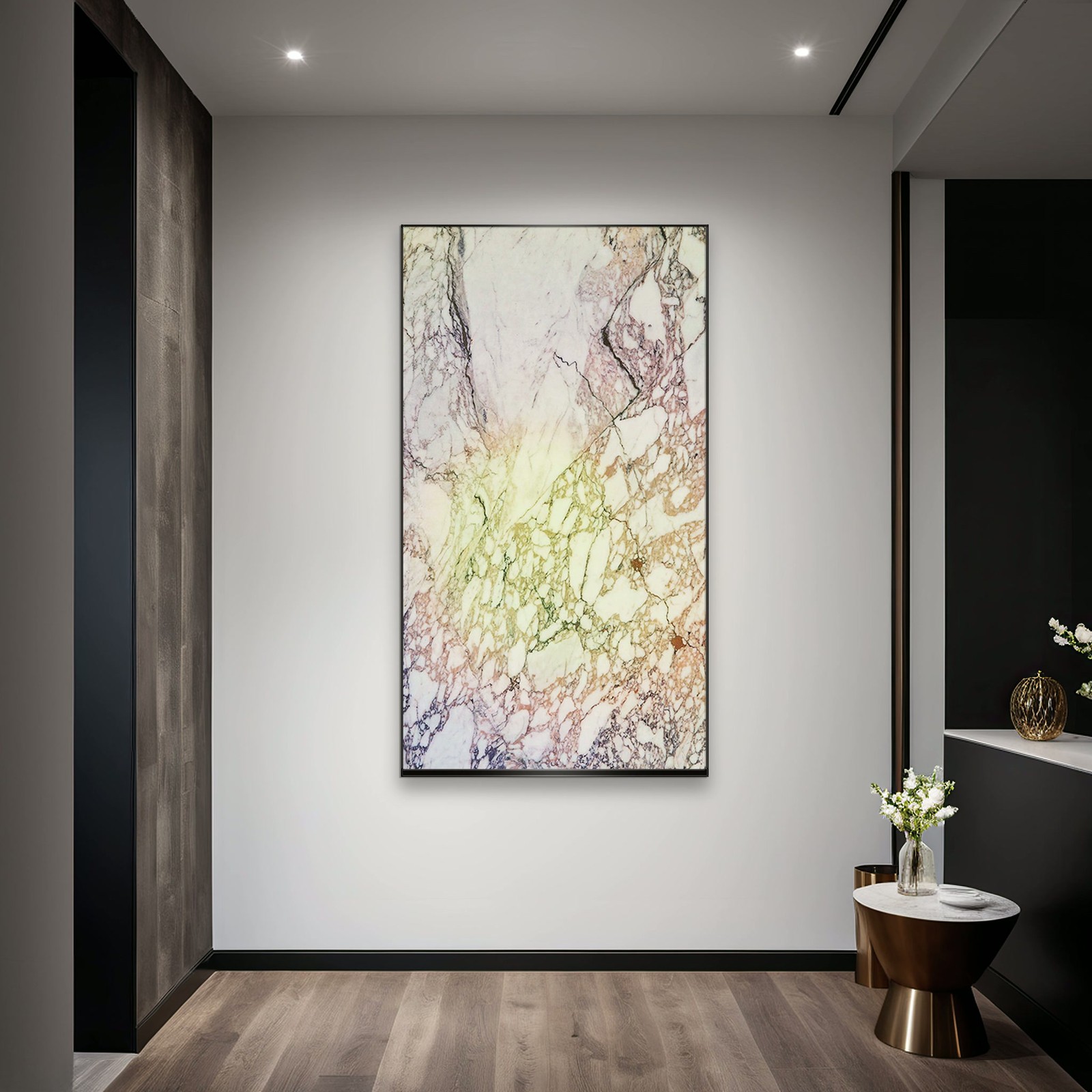
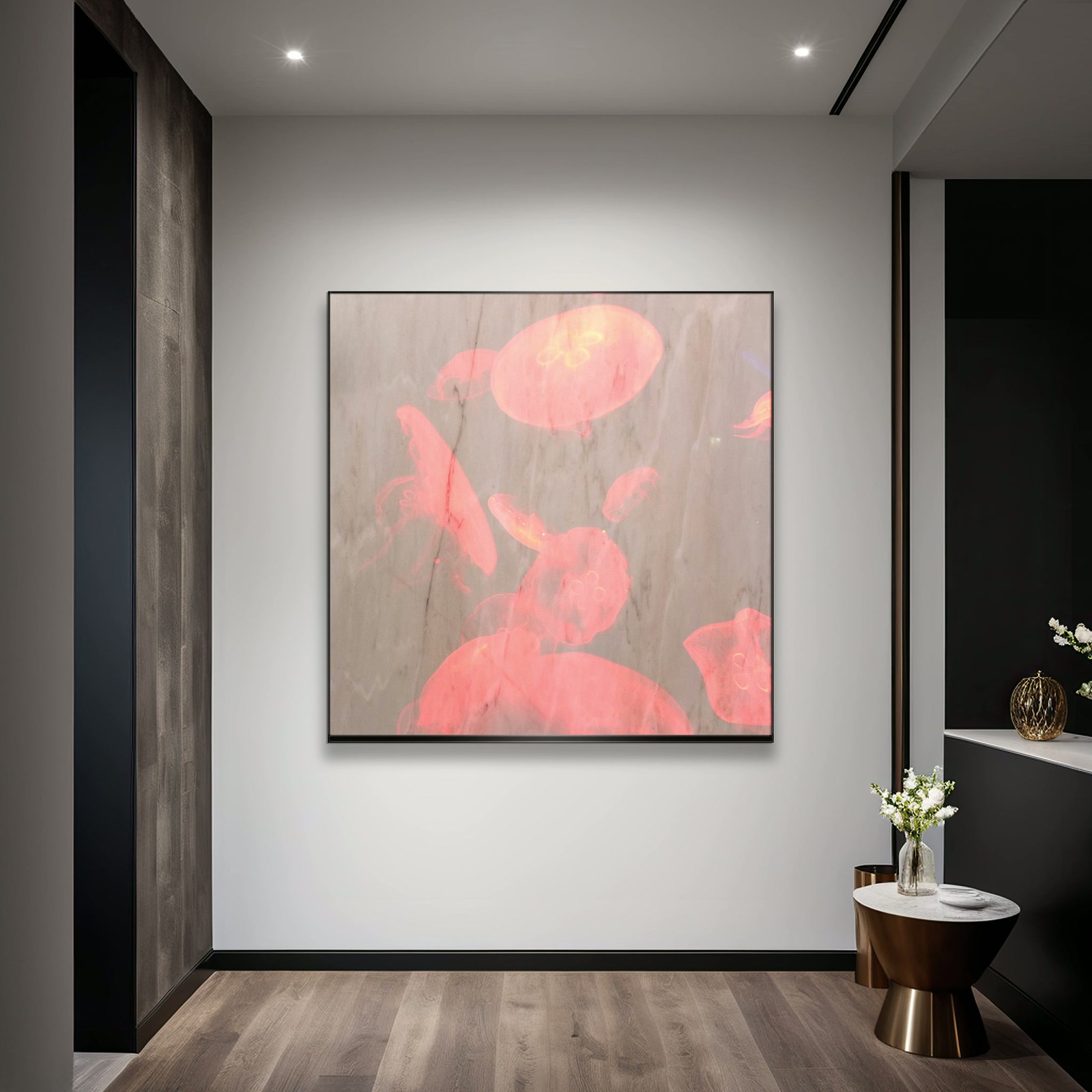
Gallery
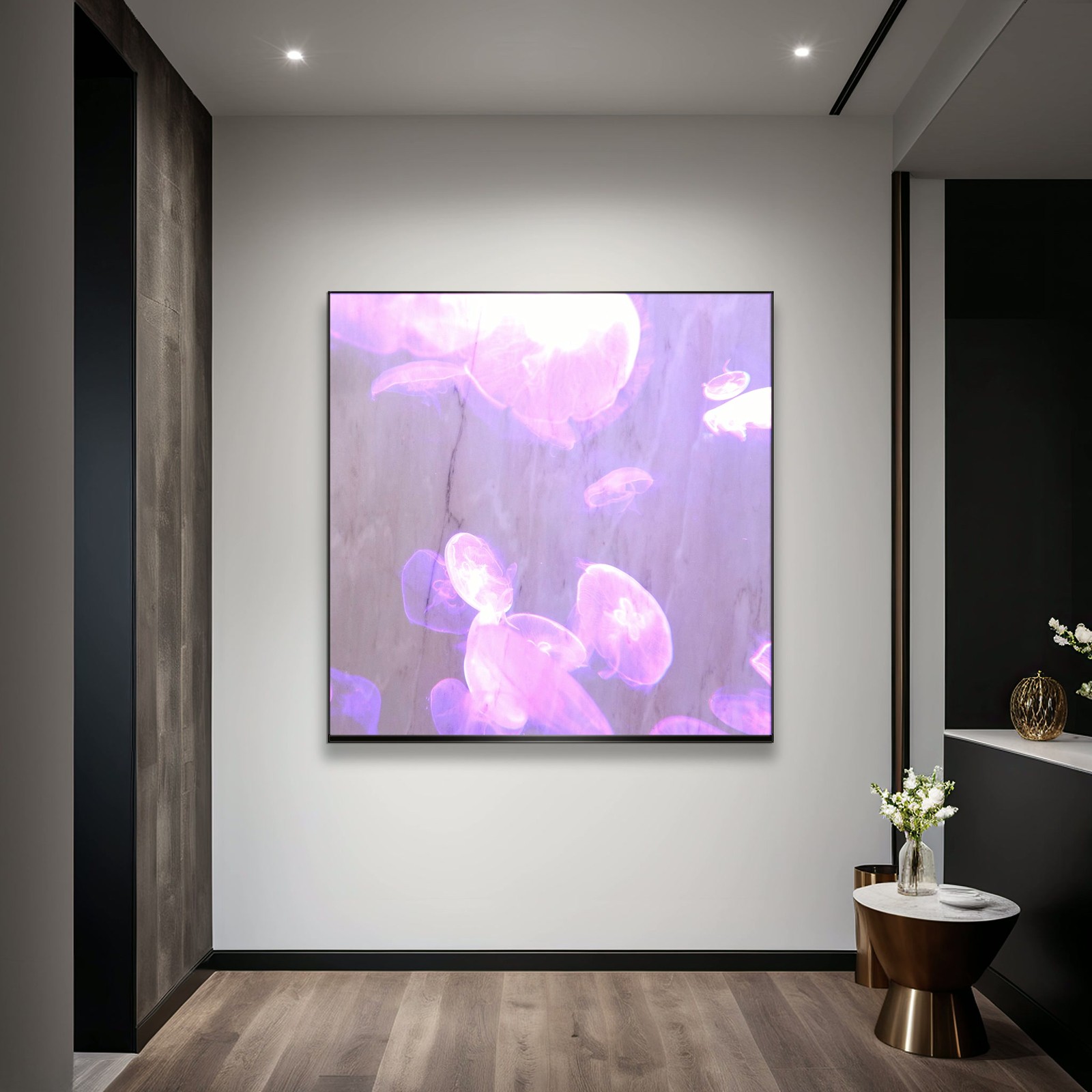
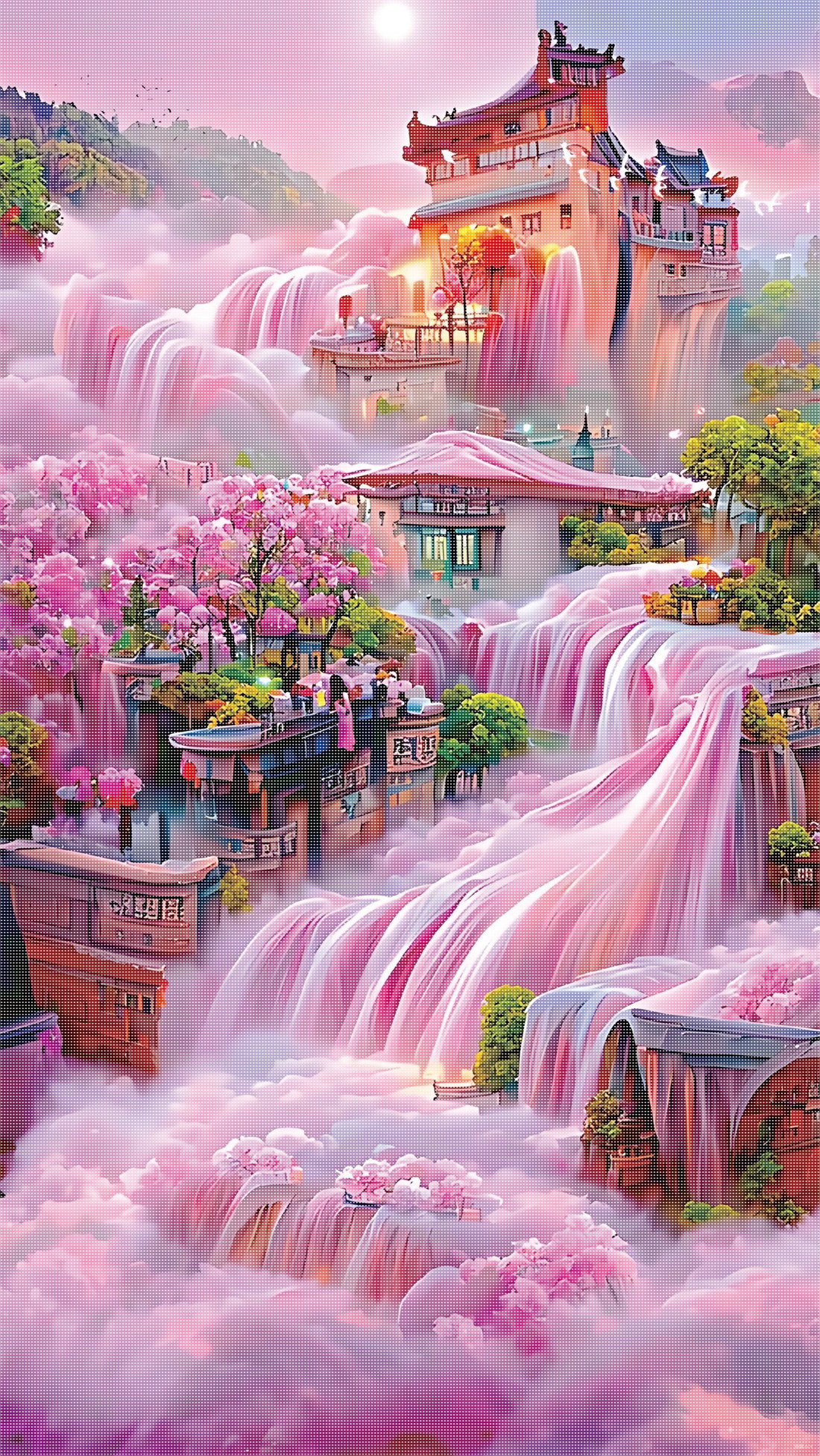
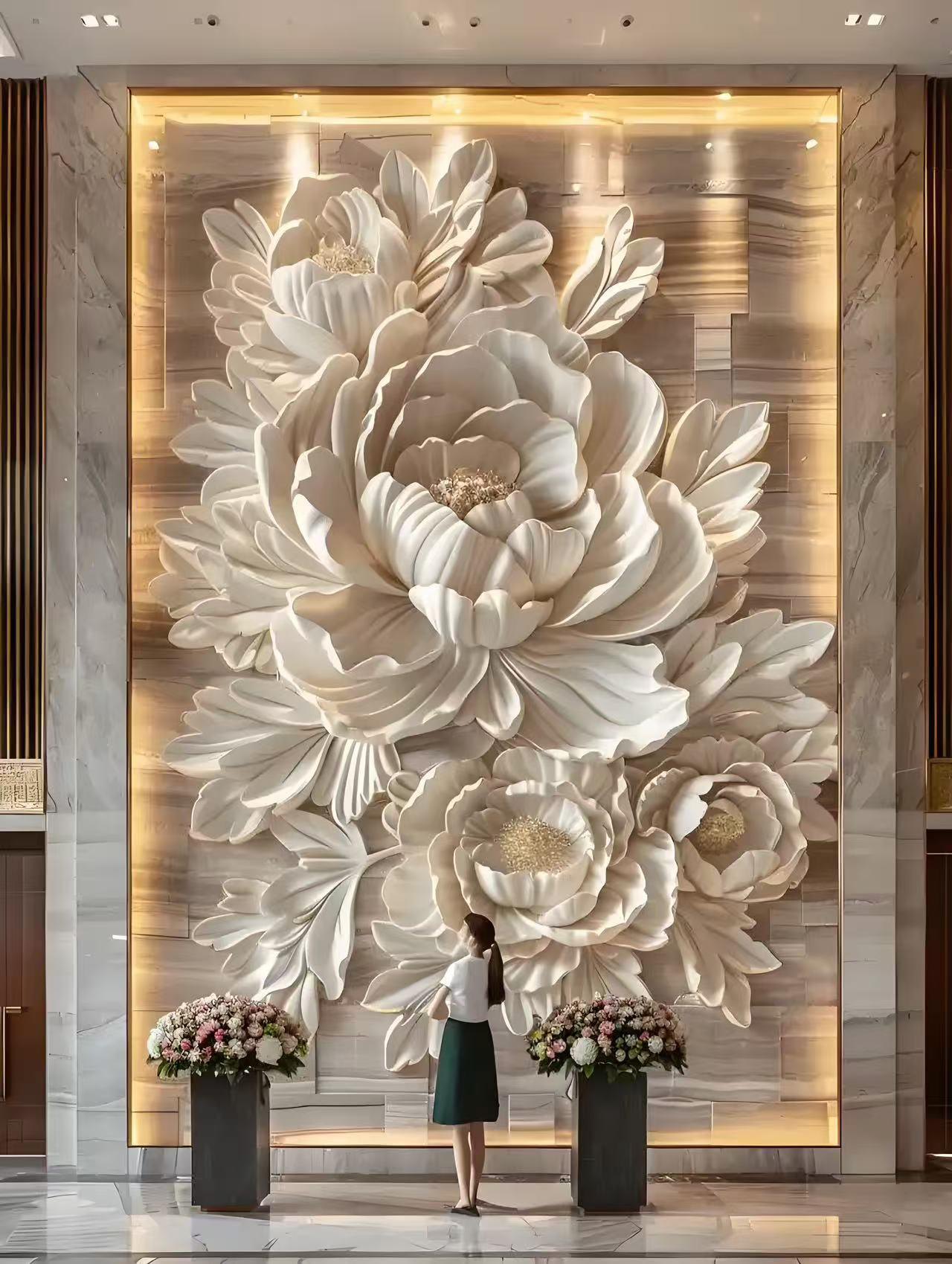
Surfaces we have made

Pricing
Display first,
finish after
The display body and the surface finish are priced separately.
If an LED was already in your plan, only the finish is added.
| Item | Basis |
|---|---|
| Display bodyBy pixel pitch · area · drive method | Rate per m² on request |
| Surface finishBy stone type · whether a pattern is specified | Rate per m² on request |
| Panel unitStable production size | 320 × 480 mm |
| Recommended indoor brightnessOver-specifying only raises cost | 600 – 1,200 nit |
Figures vary with pattern specification, area and installation conditions.
Send a drawing or a finish sample and we will reply with a real quotation.
FAQ
Frequently asked
Does it really look like stone when it is off?
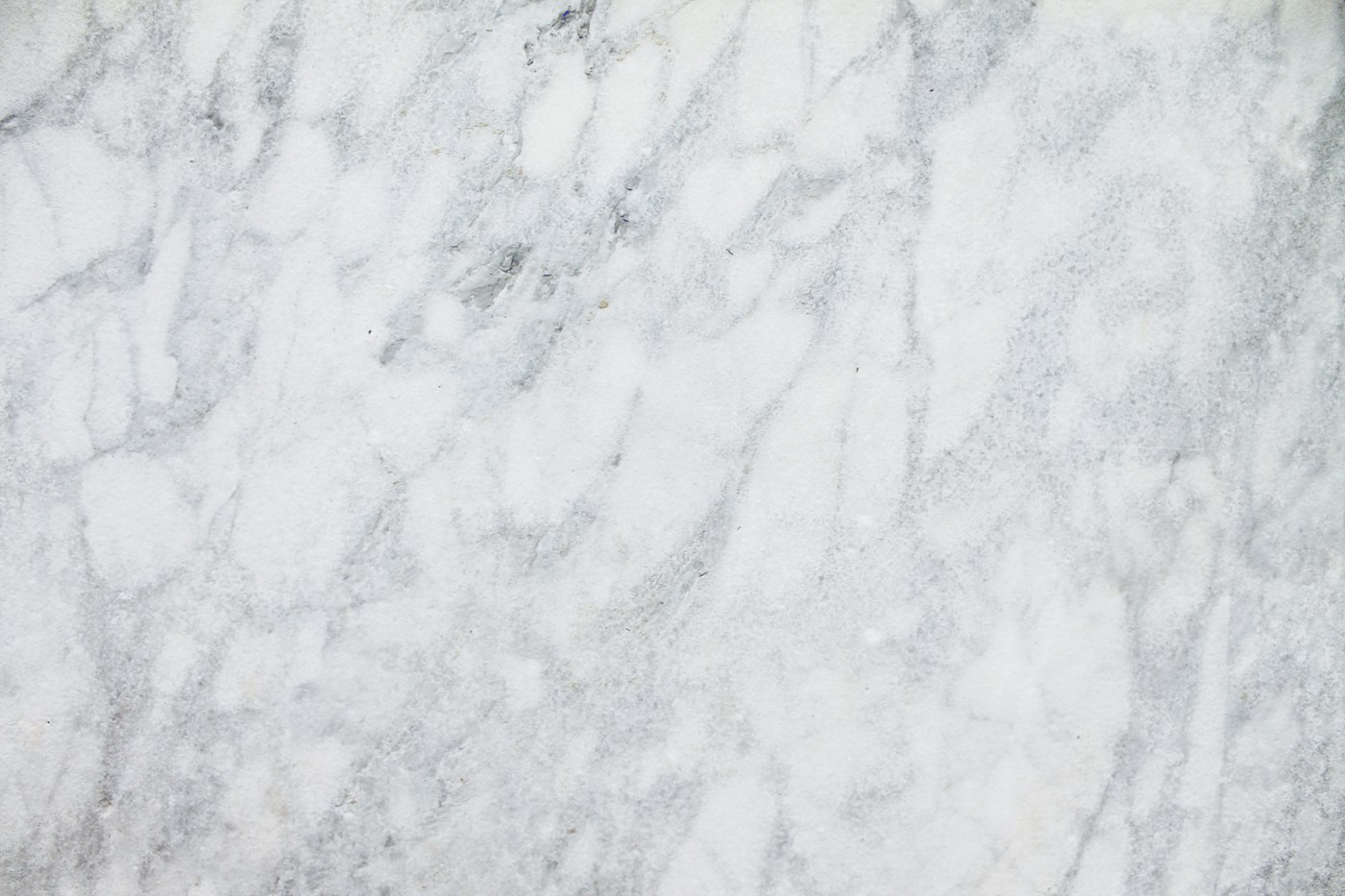
Because the surface is a real finish material, texture and reflection remain.
It is installed panel by panel, though, so seams exist just as they do when laying stone.
Is it as bright as an ordinary indoor LED?
Light is reduced as it passes the surface layer.
The darker the pattern, the greater the loss.
So we design not to outdoor high-brightness specification but to a low-brightness specification matched to indoor viewing distance.
Over-specifying only adds cost and heat.
People stay in the room for hours — does it get hot?
Common-cathode driving with a low-loss driver IC cuts power consumption sharply and brings the surface temperature down.
For a wall people lean against, we take this as the baseline design.
Can you match the marble pattern we want?
Yes.
Send a photograph or a physical sample of the stone and we will produce it in that pattern.
Can it be made large as a single sheet?
Panels are joined to cover the whole wall.
We do not recommend one continuous sheet: it creates problems in transport and later replacement.
Can we see a sample?
We keep physical samples at our Hongdae showroom.
We also send a finish sample book.
One photograph of the wall
is enough to begin
Tell us the area, the viewing distance and the finish you have in mind.
Get in touch →