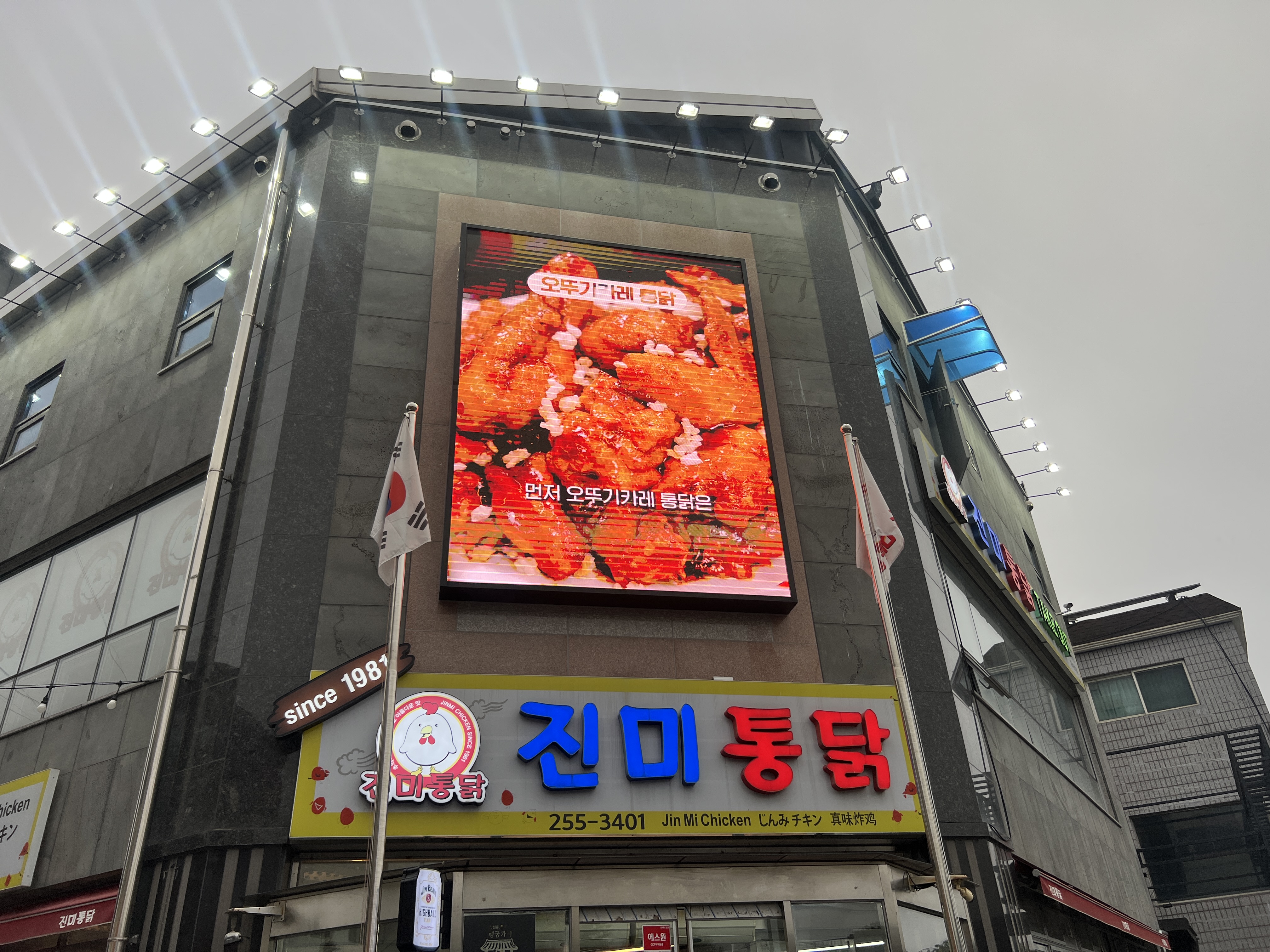
FACADE LED STRUCTURE
A frame built tooutlast the screen
Facade LED failures begin with structure and rust — not the screen. We calculate wind, weight, earthquakes and moisture first, then hang the screen on top.
0
field welds
4
forces calculated first
1:1
shop drawings
HOW IT GOES UP
Built in the factory. Bolted on site.
Columns and cross-members are joined with connection plates and high-strength bolts. The 日-shaped frames are linked into one structure, with a service walkway on every level. Embedded plates are fixed to the wall with chemical anchors, and the frame is lifted and joined.
3D demonstration for illustration. Each real structure is designed to the building's drawings.
NO FIELD WELDING
We never create the spot where galvanizing burns off
Hot-dip galvanizing is the most reliable way to keep steel from rusting. But weld galvanized steel on site and the zinc at that spot burns away. That is where rust begins. We finish every weld in the factory, galvanize the whole assembly, and join it on site with bolts only.
01
Factory cutting & welding
Cut to drawing and finish every weld.
02
Trial assembly
Stand it up once in the factory to check fit and dimensions.
03
Disassembly
Split into shipping units.
04
Galvanize as a whole
Zinc goes over the welds too, in one pass.
05
Bolt-up on site
No welding on site — bolts only.
How it differs from field welding
Galvanizing at joints
Field weldingBurned off — relies on touch-up paint
Bolt-only assemblyWelded first, then galvanized whole
Hot work
Field weldingPermits and fire watch; banned in many buildings
Bolt-only assemblyNone
Site quality
Field weldingVaries by welder
Bolt-only assemblyFit checked in factory trial assembly
Schedule
Field weldingExtra time for welding and touch-up
Bolt-only assemblyAssembly only — shorter
Replacement
Field weldingNeeds cutting
Bolt-only assemblyUndo the bolts
A weld made on site removes the galvanizing there, and from then on its life depends on the quality of the touch-up. So we remove field welding at the design stage.
FOUR FORCES
A facade structure carries four forces
Counting only the screen's weight is less than half the job. The moment it hangs on a wall, wind, earthquakes and people come with it.
DEAD LOAD
Weight Dead load
LED cabinets weigh about 25 kg/m² (aluminium). The steel frame adds its own weight. A 13 × 7 m screen is about 2.3 tonnes before the frame.
WIND
Wind Wind
An LED screen is a solid plate — wind does not pass through. Wind force = ½ × air density × speed² × drag coefficient × area. We use regional basic wind speeds of 30–45 m/s and a flat-plate drag coefficient of 1.2–1.4.
SEISMIC
Earthquake Seismic
Under Korean code a facade LED is a «non-structural component» (KDS 41 17 00 §18). Unless it is under 1.2 m high and 1,800 N, it needs seismic design. The higher on the building, the larger the seismic force.
LIVE LOAD
People Live load
People stand on the service walkway behind the screen. We design for 4.8 kN/m² uniform and 1.0 kN point load.
Safety factors — margin on top of the numbers
2.0
Main members
2.5
Connections, bolts
3.0
Foundations, anchors
TRY IT
How much stronger is the wind than the weight?
Enter the screen size and regional wind speed. In most cases the wind is far stronger than the weight. That is why facade structures are designed for wind, not weight.
Facade LED load estimate (reference only)
Basic wind speeds in Korea range roughly 30–45 m/s, higher on coasts, islands and tall buildings.
Screen area
91.0 ㎡
Screen weight
2.28 t
Basic wind pressure
0.98 kN/㎡
Wind force on the screen
116 kN
≈ 11.8 tf
Wind ÷ weight
5.2×
vs seismic exemption limit (1,800 N)
12×
Wind force = ½ × 1.225 × speed² × 1.3 × area. Real design adds exposure and gust factors for height and terrain, which usually make the number larger. Final values are fixed in the structural calculation.
CORROSION
We read the environment and stop rust with thickness
The same steel can corrode more than ten times faster depending on where it stands. So we set the site's corrosivity category first, then choose galvanizing and coating to match.
Corrosivity categories (ISO 12944)
C2
Unheated indoor
C3
Urban, general atmosphere
C4
Industrial, near coast
C5
Coastal, humid polluted air
Zinc lost per year
- Rural inland0.5–1.0 μm
- Urban inland1.0–2.0 μm
- Within 1 km of the sea2.0–4.0 μm
- Within 100 m of the sea4.0–8.0 μm
So service life is a division
Coating thickness ÷ annual loss = expected life
For coastal sites we raise coating thickness or add a paint system, specified per site. Thickness is confirmed with a test report.
When different metals touch, the weaker one corrodes
Bolt stainless straight onto galvanized steel and galvanic corrosion starts between them. We separate the two metals with insulating washers and bushings at every joint.
- Galvanized + galvanizedSame materialOK
- Galvanized + aluminiumInsulateCaution
- Galvanized + stainlessNot without insulationNo
- Aluminium + stainlessNot without insulationNo
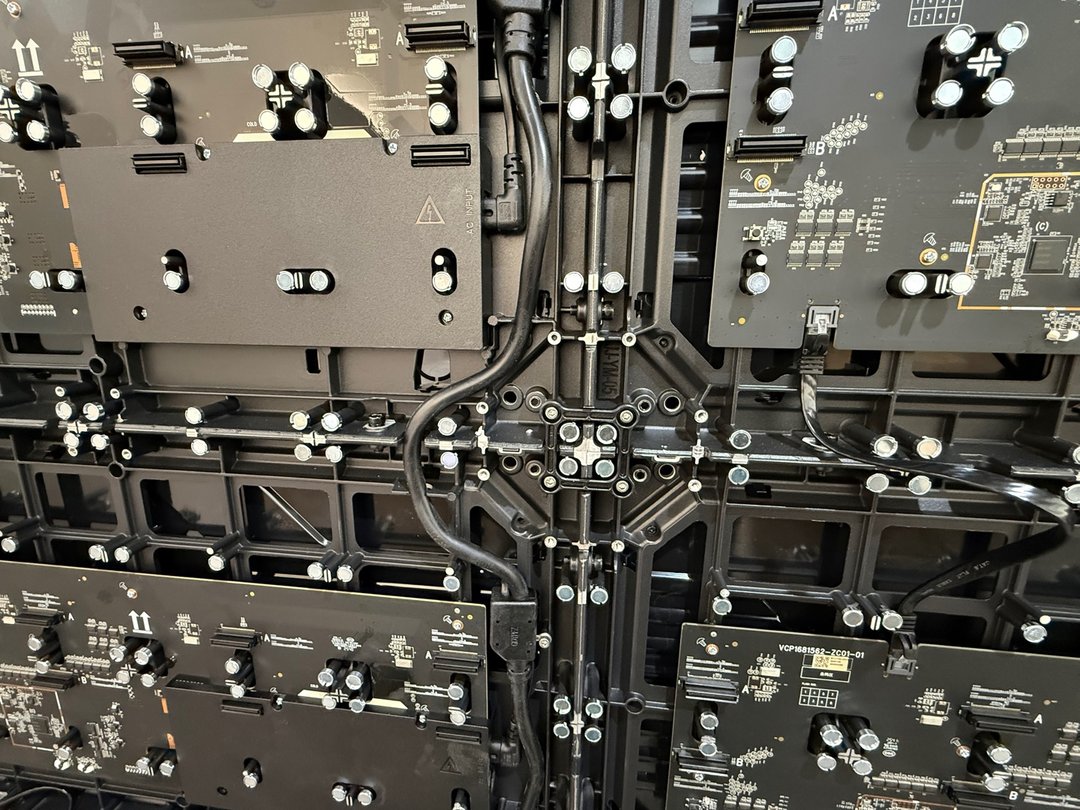
HUMIDITY · SALT · HEAT
We manage the weather inside the screen
What stops a facade LED is condensation and heat more than rain. A strong frame is not enough — the inside of the cabinet has to breathe.
Humidity · condensation
Dew pointWhen the cabinet surface cools below the dew point, water forms inside and shorts the circuits. Anti-condensation heaters keep the inside warmer than outside, with pressure-equalising vents and seals against moisture. On very humid days we adjust installation and power-on schedules.
Salt
Salt-spray testFor coastal sites we don't accept «salt-resistant» as a claim. We look at test hours — 168 h for initial pass, 240–480 h for constant coastal exposure, 720 h+ offshore (IEC 60068-2-11). We check that frame, fasteners and power parts are treated too. Test hours are never converted into «years of life».
Heat
Inside ≤ 50 °CThe space behind the screen heats up fast from sun and LED heat. Openings at top and bottom let air flow, and fan cut-outs are made during fabrication if needed. We target an internal temperature of 50 °C or less.
Waterproofing
IP65 or higherPermanent outdoor exposure starts at IP65. We look past the rating to the gasket material — foam rubber at IP65 still ages fast. The screen perimeter is closed with trim and waterproofing.
ACCESS · SAFETY
Faults happen. So we build the way in first
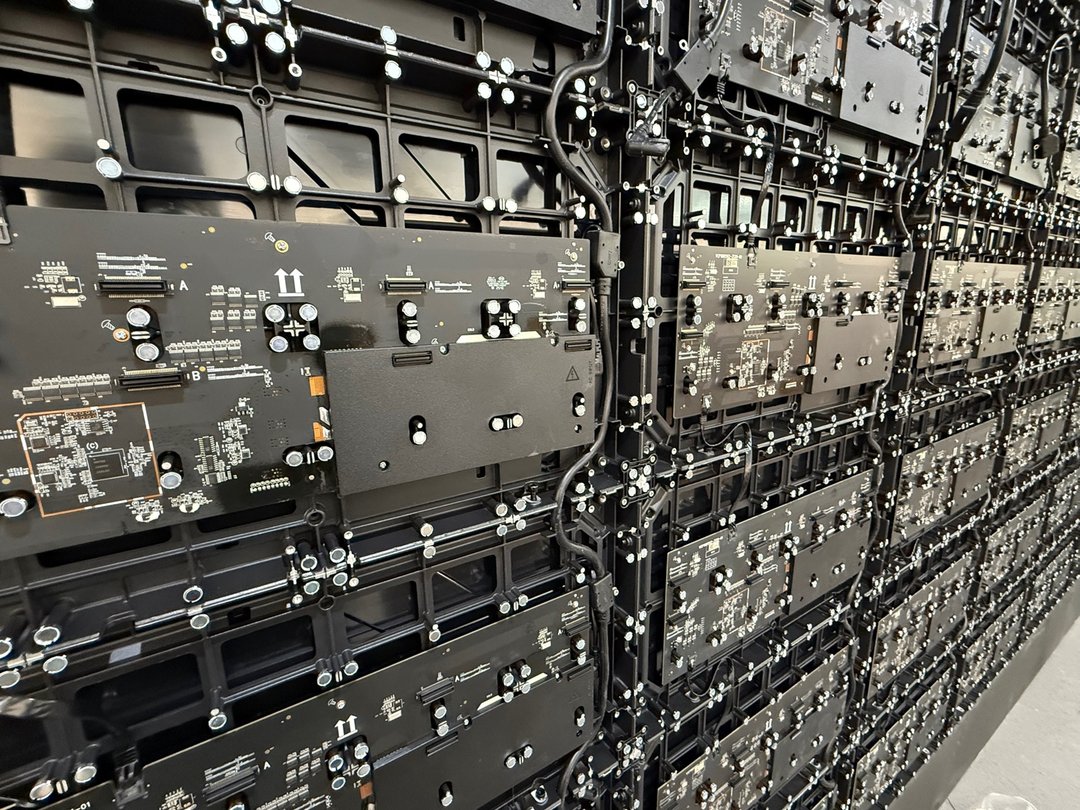
Sooner or later a facade screen needs a module changed. Without a way in from behind, a small fault means calling a crane.
600 mm
Walkway width (recommended)
2,000 mm
Walkway headroom (recommended)
1,070 mm
Guardrail height
600–800
Depth for module / power service (mm)
≤ 10 Ω
Earthing resistance
IEC 62305
Lightning protection
A walkway on every level and a fixed ladder let people move behind the screen for service. Surge protection and earthing are always installed at the power side. Bolted joints need torque management too — we check bolt tension every quarter.
PAPERWORK
Not promises. Documents.
Structural calculation
Stress calculations for the whole frame and its bolts, reviewed by a licensed Korean structural engineer.
1:1 shop drawings
Fabrication and installation drawings at true dimensions from the building drawings.
Galvanizing thickness report
Measured hot-dip galvanizing thickness.
High-strength bolt certificates
Conformity certificates ship with the bolts.
OUR WORK
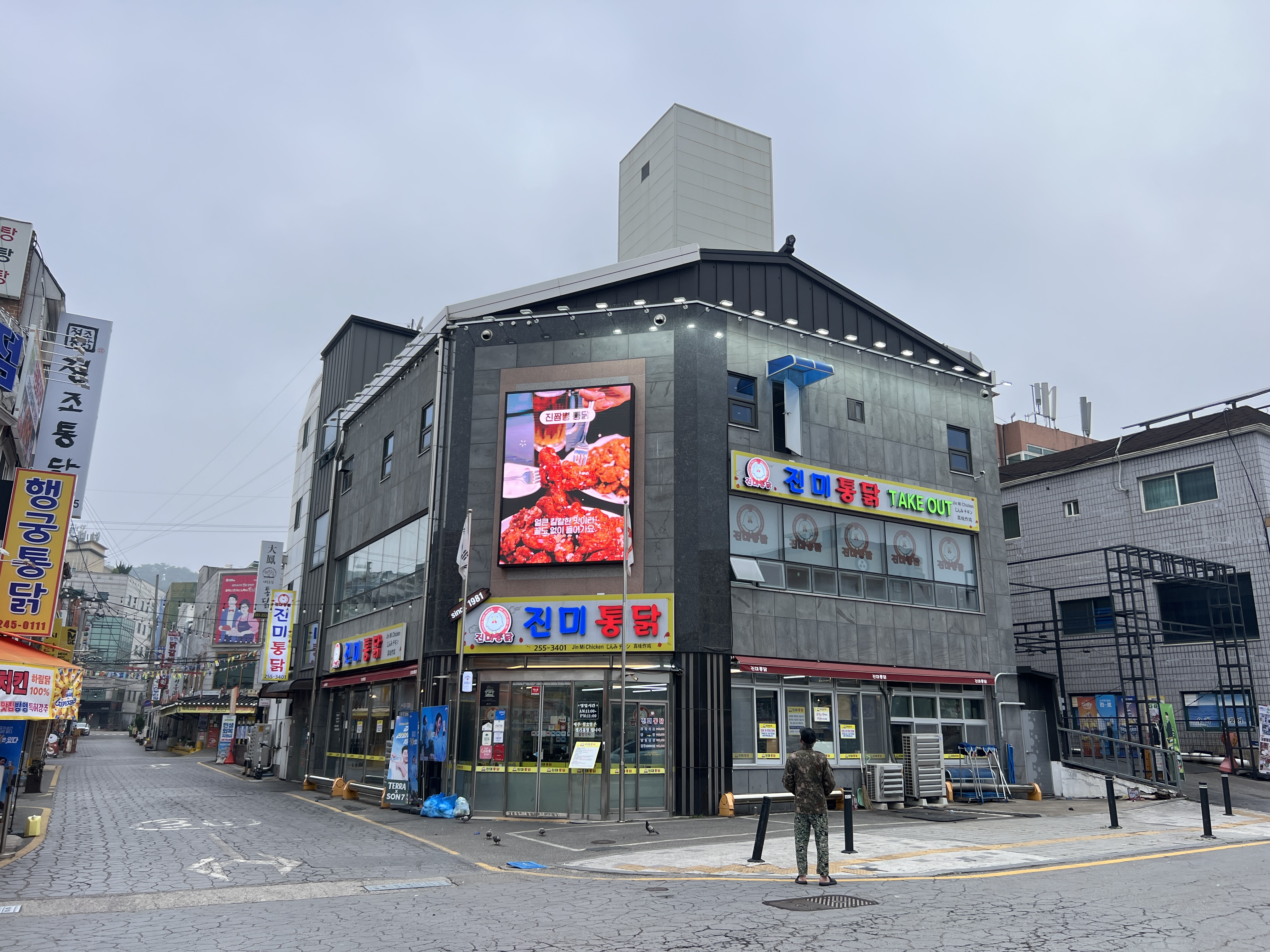
A facade we actually built
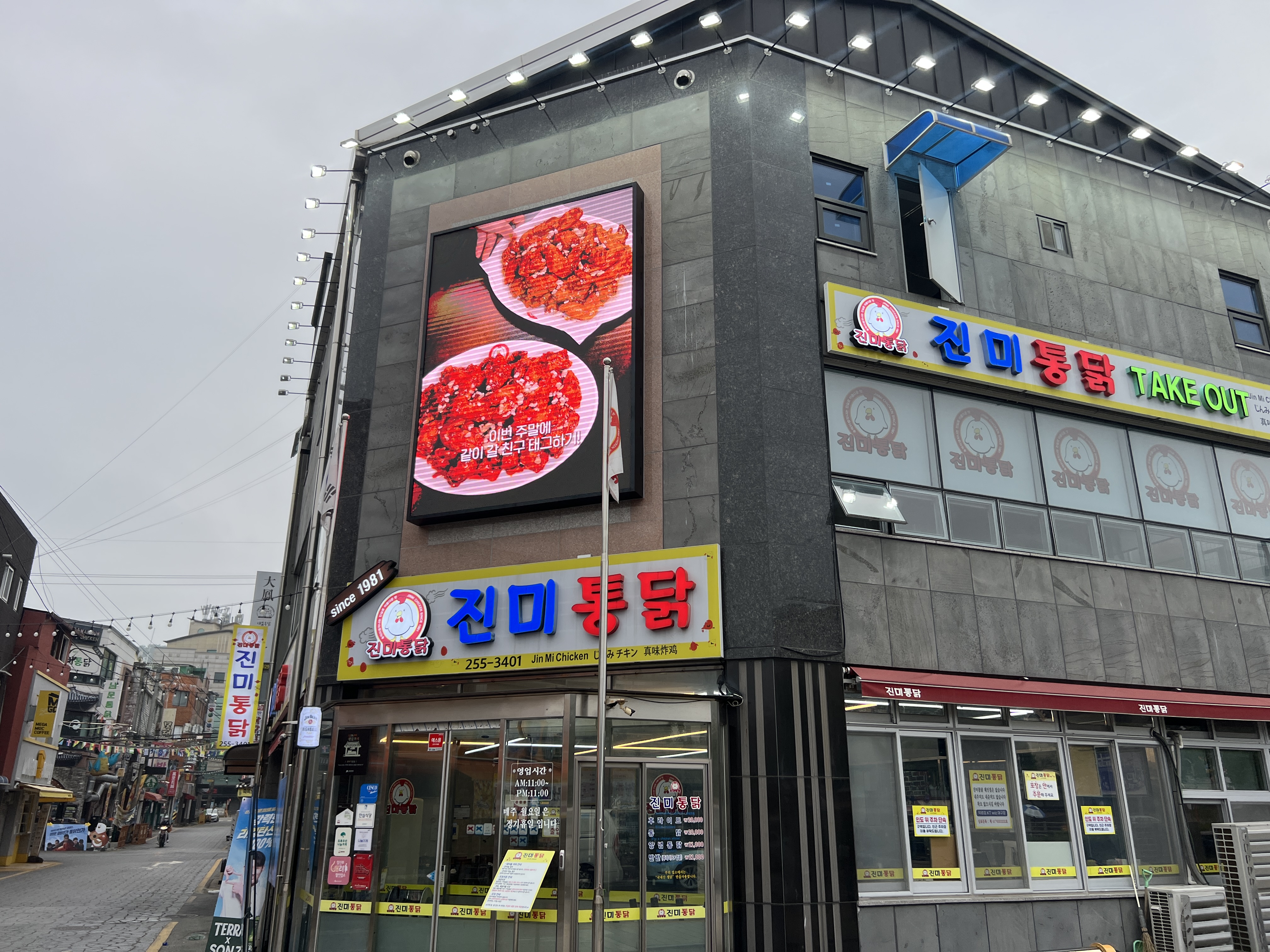
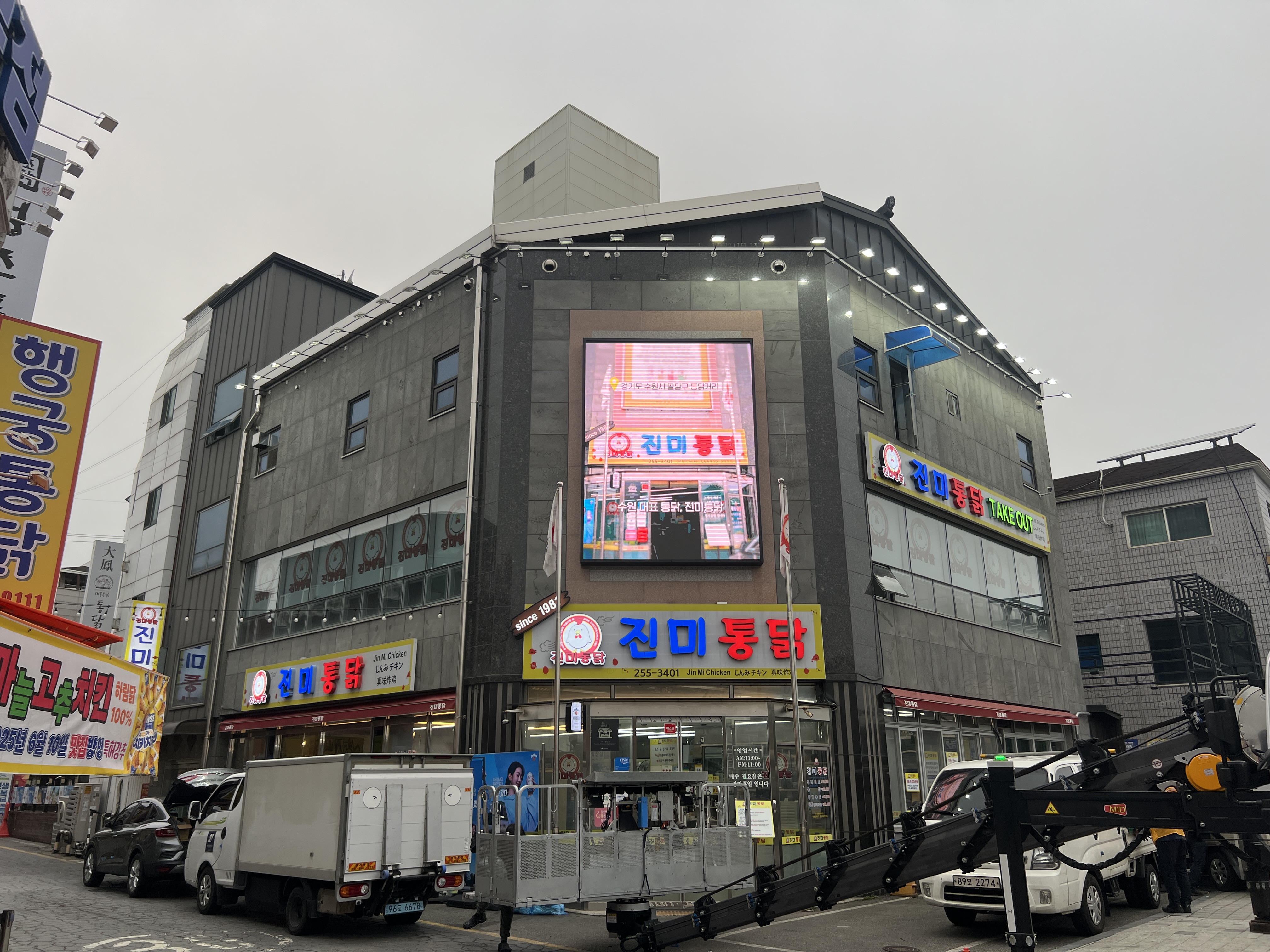
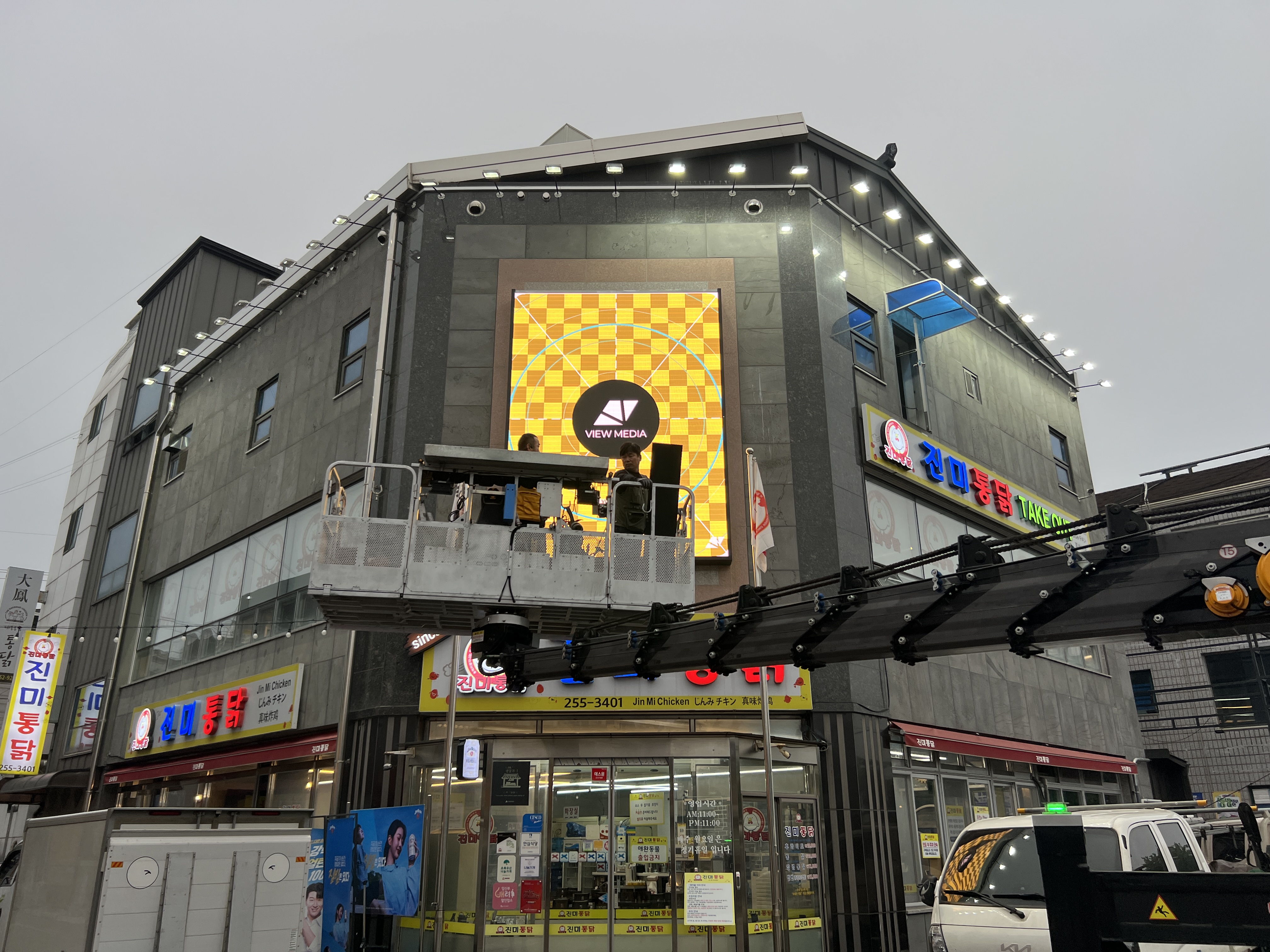
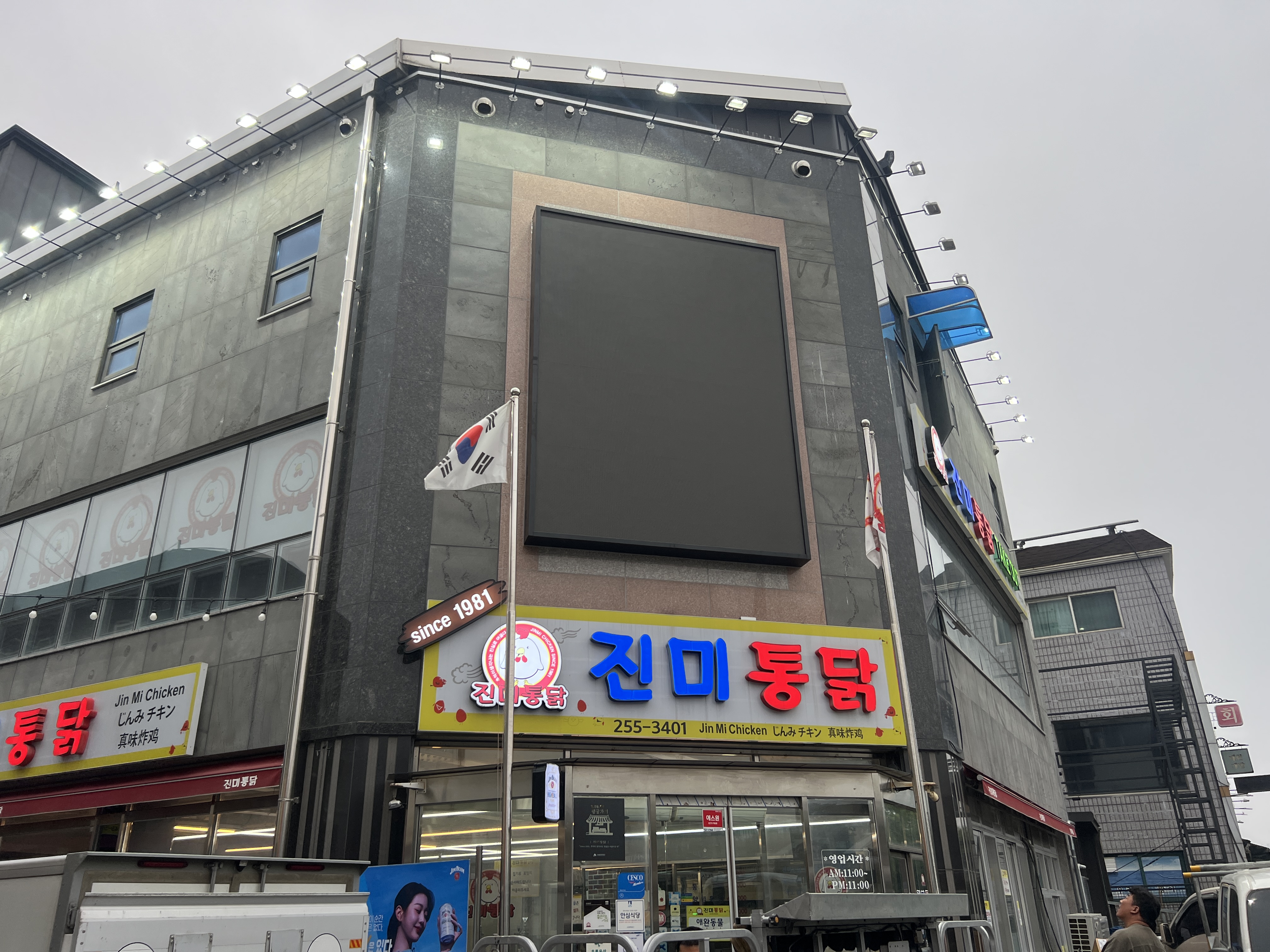
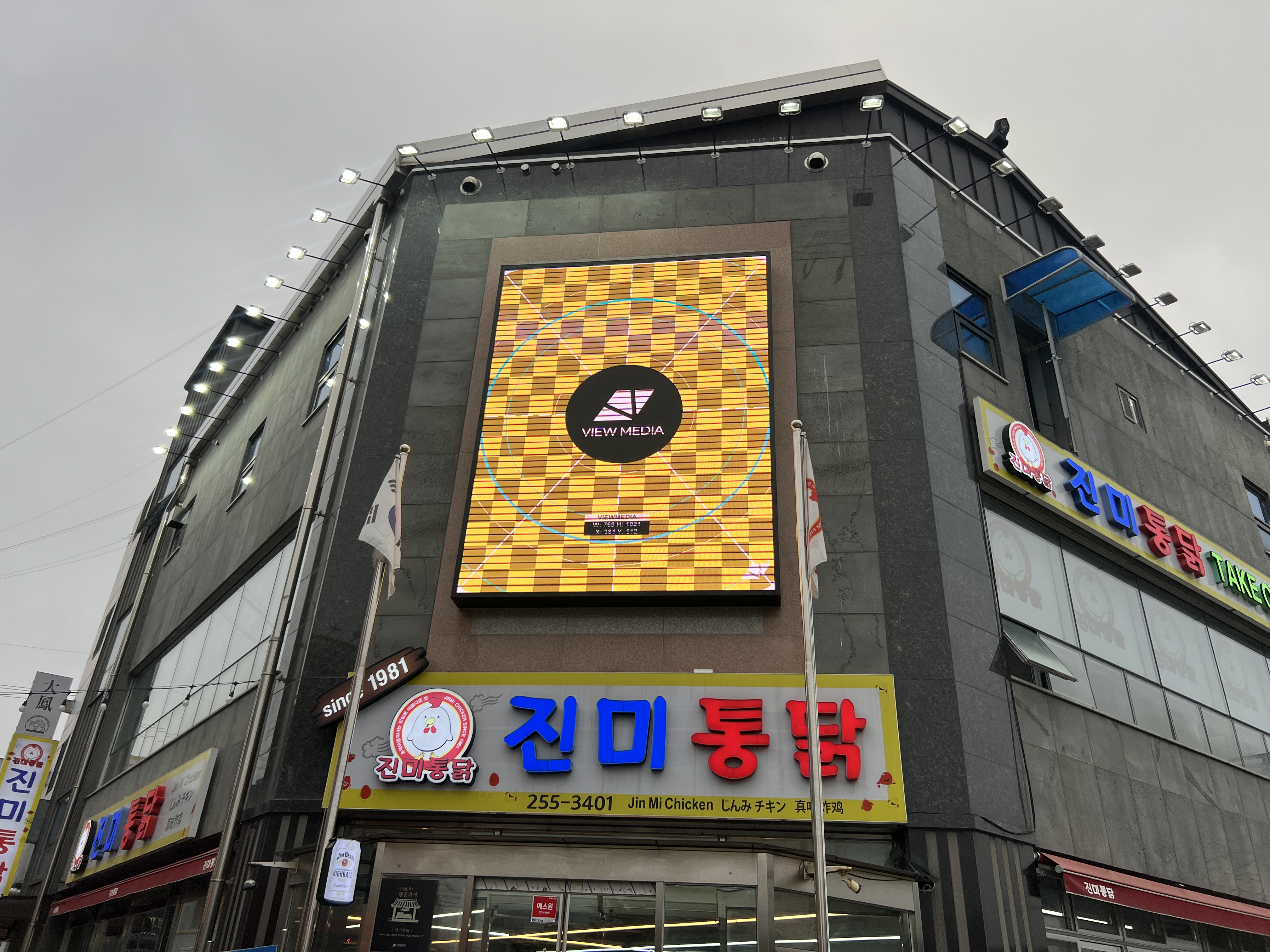
Suwon · outdoor LED replacing a sign
Large outdoor LED on a 3rd–4th floor corner facade
We replaced the sign with a large outdoor LED. Lifted by crane and aerial platform, then powered up and content-checked on site.
WHAT THE RESEARCH SAYS
International codes and research point to the same places
Edges
Wind hits the sign's edges hardest
ASCE 7 gives the largest force coefficient to the windward edge under oblique wind (Case C). So we check end members and connections separately.
ASCE 7 Ch.29
1.8
Eurocode force coefficient for signs
EN 1991-1-4 applies a force coefficient of 1.8 to signs, with an eccentricity of 25% of the width. Higher than the 1.3 used in the calculator above.
EN 1991-1-4 §7.4.3
Welds
Fatigue cracks started at welded column bases
In the US Transportation Research Board report, fatigue cracks in sign structures kept appearing at welded column-base details. 59% of responding states reported wind damage.
NCHRP Report 469 (TRB)
10 million
Small vibrations, not one storm
Just 100 hours a year of vibration at 1 Hz adds up to 10 million cycles in 28 years. Repetition, not one big gust, wears a structure out.
NCHRP Report 469 (TRB)
2.5–10 cm
Welding after galvanizing means grinding off zinc
Welding galvanized steel requires grinding off the zinc on both sides of the weld and repairing it with touch-up coatings. Bolting removes both the damage and the repair.
AGA · GAA · ASTM A780
72 yrs
Thickness is service life
Data shows 100 μm+ galvanizing going about 72 years to first maintenance even in industrial areas. Coastal sites corrode differently and are calculated separately.
AGA Time to First Maintenance
Hours ≠ years
Salt-spray hours are not service life
Continuous spray tests (IEC 60068-2-11, ASTM B117) don't predict real life. Cyclic tests that alternate spray, humidity and drying (IEC 60068-2-52) are closer to the field.
IEC 60068-2-52
Heat · moisture
Heat and moisture decide LED life
The US Department of Energy names junction temperature and moisture ingress as drivers of LED life. So cooling and sealing are part of the structural design.
U.S. DOE
PROCESS
If the frame is going up now, this is the best time
Anchors and embedded plates are strongest and cheapest when cast before the concrete pour. If the building is under construction, call us first.
01
Site & drawings
We take photos, drawings and installation height.
02
Design & calculation
Wind, dead load and seismic calculated; 1:1 drawings made.
03
Embeds in advance
Anchor positions go to the contractor on the frame schedule.
04
Fabrication & galvanizing
Welded, trial-assembled, galvanized whole, shipped.
05
Bolt-up & install
Bolts only on site, then the screen goes on.
06
Power-up, trim, seal
Wiring and tuning, perimeter sealed, service guide handed over.
STANDARDS
The standards we work to
- KDS 41 12 00 Korean Building Structural Code — wind load
- KDS 41 17 00 : 2022 Seismic design §18 non-structural components
- ISO 12944 — protective paint systems, corrosivity categories
- ISO 1461 — hot-dip galvanizing
- IEC 60068-2-11 — salt-mist test
- IEC 60529 — ingress protection (IP)
- IEC 62305 — lightning protection
- ASCE 7 Ch.29 · EN 1991-1-4 — wind loads on signs
- NCHRP Report 469 — fatigue of sign structures (US TRB)
- AGA · GAA · ASTM A780 — hot-dip galvanizing and repair
- U.S. DOE — LED reliability
FAQ
Common questions
Can we hire you for the structure only?+
Yes. Even if the LED is already chosen, we can design, fabricate and install the structure. Send the cabinet drawings and we design to them.
What if the wall is glass or stone cladding?+
Glass and stone cladding can't carry the load. We design to transfer it to the structure behind — concrete or steel.
Corners and curves?+
Yes. Curves are made by folding the steel into several facets, with screen layout and trim creating the line.
Permits?+
Conditions depend on screen size, depth and location. We check what the permit touches during design.
How is it priced?+
It depends on area, height, mounting surface and whether the site is coastal. Send a building photo and the screen size you want, and we'll shape the scope.
CONTACT
One photo of the building is enough to start
A photo of the wall, the screen size you want, and the height is enough. Drawings make it faster.
VIEW MEDIA CO., LTD. · structural design · fabrication · installation · service